
Karthigai Deepam
கார்த்திகை தீபம்
Tamil Nadu's own festival of lamps, when homes glow with clay lamps and the Maha Deepam is lit on the hill at Thiruvannamalai.
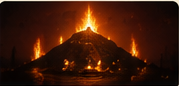
Karthigai Deepam (கார்த்திகை தீபம்) is one of the oldest festivals of the Tamil people: a night when homes, temples and streets glow with rows of little clay lamps. For many Tamil families, it is the true festival of lights of Tamil Nadu. Its most famous moment happens at Thiruvannamalai (திருவண்ணாமலை), where a great flame is lit on top of the sacred hill at dusk and can be seen from far across the countryside.
When is it celebrated
Karthigai Deepam falls in the Tamil month of Karthigai (கார்த்திகை), on the day the moon is in the star Krittika, known in Tamil as Karthigai natchathiram (கார்த்திகை நட்சத்திரம்). This day falls on or close to the full moon, pournami (பௌர்ணமி), usually between late November and mid-December.
Krittika is the small, bright star cluster that astronomers call the Pleiades. On a clear night around the festival, you can look up and try to spot it with your children.
Many families light lamps for several evenings around the festival, not just on the main day.
Why it is celebrated
The endless column of fire
According to a well-known legend, Brahma and Vishnu once argued about which of them was greater. Suddenly, Shiva appeared between them as a huge column of fire with no beginning and no end. Brahma became a swan and flew upwards to find the top, while Vishnu became a boar and dug down to find the bottom. Neither could reach the end, and both understood Shiva's greatness.
Thiruvannamalai is traditionally linked with this story, and the hill, Annamalai (அண்ணாமலை), is itself revered as a form of Shiva. The Maha Deepam lit on its summit recalls that column of light. Many Shiva temples show this story in a carving called Lingodbhavar (லிங்கோத்பவர்), often found on the outer wall behind the main shrine.
Murugan and the Karthigai maidens
Another tradition links the festival with Murugan. According to legend, six sparks from Shiva's third eye fell into the Saravana pond, Saravana Poigai (சரவணப் பொய்கை), and became six babies. They were cared for by the six Karthigai maidens, the stars of Krittika. When Goddess Parvati embraced them, the six became one child with six faces, Arumugam (ஆறுமுகம்). This is why Murugan is also called Karthikeyan (கார்த்திகேயன்).
A very old Tamil tradition
A festival of lamps in the month of Karthigai is mentioned in Sangam-era Tamil poetry, so Tamils have been lighting these lamps for many centuries.
How families celebrate
- Preparing the lamps — the small clay lamps, agal vilakku (அகல் விளக்கு), are cleaned or bought new, and filled with oil or ghee and a cotton wick. Children love to help, with an adult nearby.
- Evening prayer — at dusk, the first lamp is lit in the pooja room, and offerings of pori and appam are made.
- Lighting up the home — lamps are then placed on the doorstep, windowsills, walls, stairs and balcony, and along the lines of the kolam, until the whole house glows.
- Fasting — some devotees fast during the day and eat only after the lamps are lit.
- Temple visits — families visit Shiva and Murugan temples, where the evening is especially crowded and beautiful.
At Thiruvannamalai
At the Arunachaleswarar temple (அருணாசலேஸ்வரர் கோயில்) in Thiruvannamalai, Karthigai Deepam is the high point of a ten-day festival. Before dawn on the main day, the Bharani Deepam (பரணி தீபம்) is lit inside the temple. At dusk, the Maha Deepam (மகா தீபம்) is lit in a huge vessel on the hilltop, fed with ghee, and the crowds below cry out "Annamalaiyarukku arohara!" (அண்ணாமலையாருக்கு அரோகரா!). The flame keeps burning for several days afterwards. Many pilgrims also walk barefoot around the base of the hill, a walk called Girivalam (கிரிவலம்).
Sokkapanai
In many temples across Tamil Nadu, a tall structure of dried palm leaves called sokkapanai (சொக்கப்பனை) is set alight in front of the temple in the evening. Children love to watch the roaring bonfire from a safe distance.
Traditional food
- Pori urundai (பொரி உருண்டை) — balls of puffed rice (pori) bound with hot jaggery syrup, sometimes with bits of coconut and a pinch of cardamom. Pori is so closely tied to this festival that many people simply call it "Karthigai pori".
- Nel pori and aval pori — puffed paddy and puffed flattened rice, also mixed with jaggery and offered to the gods.
- Appam (அப்பம்) — small, soft, sweet fritters made with rice flour, jaggery and banana, often fried in ghee and called nei appam (நெய் அப்பம்).
Kolam and decorations
On Karthigai Deepam, the kolam (கோலம்) and the lamps work together. Families draw a kolam at the entrance in the afternoon, often with lamp designs, and then set the agal vilakku on its dots and curves. The brass kuthuvilakku (குத்துவிளக்கு) is polished and lit, and the doorway is decorated with flowers and mango leaves.
A safety note: keep lamps away from curtains, paper decorations and loose silk clothes, and out of reach of small children and pets. Never leave them burning in an empty room, and where open flames are not allowed, battery-powered lamps can still make the home glow.
Around Tamil Nadu and the world
Temples all over Tamil Nadu light lamps and sokkapanai on this day, and Thiruvannamalai draws pilgrims from across India and beyond. In Kerala, the day is celebrated as Thrikarthika, also with lamps. In Sri Lanka, Tamils mark it as Karthigai Vilakkeedu (கார்த்திகை விளக்கீடு), lighting lamps at homes and temples.
Tamil families in Malaysia, Singapore, the UK, North America and elsewhere light clay lamps on their doorsteps and balconies, and temples hold evening pujas. The clay lamps many families buy for Deepavali, a few weeks earlier, can be lit again.
Wherever you are, a lamp at the door and a simple "Karthigai Deepa vazhthukal" (கார்த்திகை தீப வாழ்த்துகள்) to friends and family keep this ancient festival of light glowing.
Published 21 September 2026
You may also like
More festivalsThe Fruit of Wisdom
ஞானப் பழம்
Sage Narada brings one golden mango to Kailash, and two brothers race for it: one around the world, one around his parents.
Kanda Sashti
கந்த சஷ்டி
Six days of fasting and prayer to Murugan after Deepavali, ending in Soorasamharam, the victory over Soorapadman, at Thiruchendur.
Thaipusam
தைப்பூசம்
A great festival of Murugan on Poosam star in Thai, when devotees carry kavadi and milk pots to Palani, Batu Caves and beyond.