
Thaipusam
தைப்பூசம்
A great festival of Murugan on Poosam star in Thai, when devotees carry kavadi and milk pots to Palani, Batu Caves and beyond.
Thaipusam (தைப்பூசம்) is one of the biggest festivals of Lord Murugan, the much-loved god often called Tamil Kadavul (தமிழ்க் கடவுள்), "the god of the Tamils". On this day, huge numbers of devotees walk to his temples, many carrying a decorated kavadi (காவடி) on their shoulders or a pot of milk on their heads, and the air rings with the chant "Vetrivel Muruganukku Arohara!" (வெற்றிவேல் முருகனுக்கு அரோகரா!). It is a festival of faith and gratitude, and of keeping the promises people make to God.
When is it celebrated
The name joins the Tamil month of Thai (தை) with the star Poosam (பூசம்). Thaipusam falls on the day the moon is in Poosam during Thai, which is usually on or near the full moon. This means it usually comes between late January and mid-February.
Many devotees prepare for days or even weeks beforehand with a viratham (விரதம்), a period of fasting, simple vegetarian food, prayer and self-discipline.
Why it is celebrated
The gift of the Vel
One popular tradition holds that on Thaipusam, Goddess Parvati gave Murugan the Vel (வேல்), his divine spear, with which he later defeated the asura Soorapadman. The Vel is often explained as a symbol of wisdom that is sharp, deep and clear, cutting through ignorance. You can read the full story of that victory on our Kanda Sashti page.
Palani and the fruit of wisdom
According to a well-known story, the sage Narada brought a special fruit, the gnana pazham (ஞானப்பழம்) or "fruit of wisdom", to Shiva and Parvati. They said it would go to whichever of their sons went around the world first. Murugan set off at once on his peacock. Ganesha simply walked around his parents, saying that they were his whole world, and won the fruit.
Disappointed, young Murugan left home and went to a hill in the south, giving up his fine clothes and ornaments. Shiva and Parvati followed him and lovingly told him, "Pazham nee" (பழம் நீ), "You yourself are the fruit." Tradition says this is how the place came to be called Palani (பழனி). There Murugan is worshipped as Dhandayuthapani (தண்டாயுதபாணி), a young ascetic holding a staff.
Idumban and the first kavadi
According to tradition, the sage Agathiyar asked a strong devotee named Idumban (இடும்பன்) to carry two hills to the south. Idumban hung them from the two ends of a pole and carried it across his shoulders. Near Palani he set them down to rest, and when he tried to lift them again, he could not, because young Murugan was standing on one of the hills. Murugan blessed Idumban, who became his devoted guardian, and it is said that Murugan promised to bless all who come to him carrying a load in the same way. This, tradition says, is how the kavadi began. At Palani, many pilgrims pray at Idumban's shrine first.
How families celebrate
- Kavadi — a kavadi is an arch of wood or metal, decorated with peacock feathers, flowers and pictures of Murugan, carried on the shoulders. A paal kavadi (பால் காவடி) carries small pots of milk, and a pushpa kavadi is covered with flowers. Kavadi bearers often dance to drums and devotional songs as they walk.
- Paal kudam — many devotees, including children, carry a paal kudam (பால் குடம்), a pot of milk, on their heads. The milk is used for the abhishekam (அபிஷேகம்), the sacred bathing of Murugan's image.
- Walking pilgrimage — many devotees make a paadha yathirai (பாத யாத்திரை), walking to Palani from towns and villages far away, sometimes for several days.
- Offering hair — many devotees offer their hair at Palani as a sign of humility and thanks, and some families bring young children there for their first tonsure.
- Vows of piercing — a smaller number of devotees fulfil vows by piercing their cheeks, tongue or skin with small vel-shaped skewers or hooks, called alagu (அலகு). This is done only after long preparation and under the guidance of experienced elders, and it is not something to try at home.
- At home — families who cannot travel light a lamp, pray to Murugan, and sing devotional songs such as the Kanda Sashti Kavasam (கந்த சஷ்டி கவசம்) or the Thiruppugazh (திருப்புகழ்) of Arunagirinathar.
Traditional food
- Panchamirtham (பஞ்சாமிர்தம்) — Palani is famous for this sweet, jam-like offering made with bananas, jaggery, ghee, honey and cardamom. Pilgrims bring it home to share as prasadam.
- Sweet offerings at home — many families prepare a simple sweet such as sakkarai pongal to offer before the meal.
- Simple vegetarian meals — devotees who have kept a viratham break their fast with a simple, sattvic meal after worship.
Around Tamil Nadu and the world
In Tamil Nadu, Thaipusam is celebrated at all six abodes of Murugan, the Arupadai Veedu (ஆறுபடை வீடு): Thiruparankundram, Thiruchendur, Palani, Swamimalai, Thiruthani and Pazhamudircholai. Palani sees the largest crowds.
At Vadalur (வடலூர்), Thaipusam has another special meaning. Followers of the saint Vallalar (வள்ளலார்), Ramalinga Swamigal, gather at the Sathya Gnana Sabai (சத்திய ஞான சபை) for the Jothi darisanam (ஜோதி தரிசனம்), when a series of coloured screens is drawn aside to reveal a flame, the symbol of divine light.
Thaipusam is also one of the grandest Tamil festivals outside India:
- Malaysia — at the Batu Caves near Kuala Lumpur, huge crowds climb 272 steps to the temple in the cave, watched over by a giant golden statue of Murugan. Penang also holds a famous procession. Thaipusam is a public holiday in several Malaysian states.
- Singapore — kavadi bearers walk from the Sri Srinivasa Perumal Temple to the Sri Thendayuthapani Temple.
- Mauritius, South Africa and Sri Lanka — Tamil communities hold large processions and temple festivals.
Wherever it is celebrated, Thaipusam shows the deep bond between Murugan and his devotees, and the strength of a promise kept with love.
Published 21 September 2026
You may also like
More festivals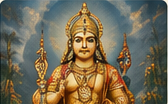
Lord Murugan
முருகன்
Meet Murugan, the young Tamil god of courage and wisdom, with his shining Vel, his peacock and his six sacred abodes.
The Fruit of Wisdom
ஞானப் பழம்
Sage Narada brings one golden mango to Kailash, and two brothers race for it: one around the world, one around his parents.
Kanda Sashti
கந்த சஷ்டி
Six days of fasting and prayer to Murugan after Deepavali, ending in Soorasamharam, the victory over Soorapadman, at Thiruchendur.