
Ven Pongal
வெண்பொங்கல்
Soft, savoury rice and moong dal tempered with ghee, black pepper, cumin, ginger and cashews: a comforting Tamil breakfast.
Ven pongal, "white pongal", is the savoury cousin of sakkarai pongal. Rice and moong dal are cooked together until soft and creamy, then finished with a tempering of ghee, whole black pepper, cumin, ginger, curry leaves and cashews. It is warm, gently peppery and very comforting: a favourite breakfast in Tamil homes, usually served with coconut chutney and sambar.
Ingredients
- ¾ cup raw rice (pachai arisi, such as raw ponni or sona masuri)
- ⅓ cup split yellow moong dal (paasi paruppu)
- 4 cups water, plus ½ cup hot water or milk to loosen at the end
- 1 teaspoon salt, or to taste
- 4 tablespoons ghee, divided
- 1 teaspoon whole black peppercorns
- ½ teaspoon coarsely crushed black pepper
- 1 teaspoon cumin seeds
- 1 tablespoon finely chopped fresh ginger (about a 1-inch piece)
- 10 to 12 cashews, halved
- 1 sprig curry leaves (about 12 leaves)
- A pinch of asafoetida (hing)
- 1 green chilli, slit (optional)
Method
- Roast the dal. Dry-roast the moong dal in a heavy pan over medium heat for 2 to 3 minutes, stirring, until it smells nutty. Do not let it brown.
- Wash. Tip the dal into a bowl with the rice and rinse two or three times until the water runs mostly clear.
- Cook. Put the rice and dal in a pressure cooker with 4 cups of water and the salt. Cook for 5 to 6 whistles on medium heat, then let the pressure release on its own. To cook in a pot instead, simmer covered on low heat for 25 to 30 minutes, stirring now and then and adding hot water if it gets too thick, until the rice is completely soft.
- Mash. Open the cooker and mash the rice and dal lightly with a ladle. Stir in ½ cup hot water or milk so the pongal is soft and spoonable, and add 1 tablespoon of ghee. Keep it warm on the lowest heat.
- Make the tempering. Heat the remaining 3 tablespoons of ghee in a small pan over medium heat. Add the whole peppercorns and cumin seeds and let them sizzle for a few seconds. Add the cashews and fry until light golden. Add the ginger, green chilli (if using) and curry leaves and stir for 30 seconds. Finish with the crushed pepper and asafoetida.
- Combine. Pour the hot tempering over the pongal and mix well. Taste and adjust the salt.
- Serve. Serve hot, with coconut chutney and sambar or kathirikkai gothsu (a tangy brinjal side dish).
Tips
- Soft is the goal. Ven pongal should be creamy and slightly loose, not dry like fried rice. It thickens quickly as it stands, so add a little hot water or milk just before serving.
- Whole pepper is traditional. Some people pick the peppercorns out as they eat; if your children find them too strong, use only crushed pepper and reduce it to ¼ teaspoon.
- Do not burn the tempering. Cumin and curry leaves turn bitter if the ghee is too hot. Keep the heat at medium.
- More dal, more creaminess. For a softer, richer pongal, use equal parts rice and dal and add an extra ½ cup of water.
- Leftovers firm up in the fridge. Loosen them with hot water and warm gently; they keep for a day.
When it's made
Ven pongal is an everyday breakfast, but it also has a place at festival time. Many families cook it alongside sakkarai pongal during the Pongal celebrations in Thai, and it is a well-loved temple offering in the cool mornings of Margazhi. Read more about the harvest festival on our Pongal page.
Published 21 September 2026
You may also like
More recipesSakkarai Pongal
சர்க்கரைப் பொங்கல்
Rice and moong dal slow-cooked with jaggery, ghee and cardamom: the sweet, golden heart of the Thai Pongal celebration.
Pongal
பொங்கல்
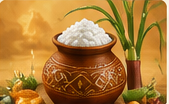
Tamil Nadu's four-day harvest festival, thanking the sun, the land and the cattle with pots of freshly boiled pongal.
Maanga Pachadi
மாங்காய்ப் பச்சடி
Raw mango simmered with jaggery and neem flowers: a sweet, sour, bitter and spicy dish made for Tamil New Year.