
Varalakshmi Vratham
வரலட்சுமி விரதம்
On a Friday before the Aavani full moon, women worship Lakshmi as Varalakshmi, the giver of boons, in a kalasam dressed as the goddess.
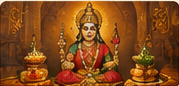
Varalakshmi Vratham (வரலட்சுமி விரதம்) is a day of prayer to Goddess Lakshmi (லட்சுமி) as Varalakshmi, "the Lakshmi who grants boons". On a Friday in the monsoon months, women dress a sacred pot, the kalasam (கலசம்), as the goddess, welcome her home with songs, and pray for the happiness of their families. Also called Varalakshmi Nombu (வரலட்சுமி நோன்பு), it is one of the loveliest home poojas of the year.
When is it celebrated
Varalakshmi Vratham is usually observed on the Friday just before the full moon, Pournami (பௌர்ணமி), of the lunar month of Shravana, which Tamils call Aavani (ஆவணி). In the Tamil calendar, this Friday usually falls in Aadi (ஆடி), and sometimes in Aavani, so the festival comes in July or August.
Fridays are traditionally special to the Goddess, and Aadi Fridays already bring crowds to Amman temples, as our Aadi Perukku guide explains. Families check the panchangam (பஞ்சாங்கம்), the Tamil almanac, or ask their priest for the exact day.
Why it is celebrated
Lakshmi is the goddess of wealth, prosperity and well-being, and the consort of Vishnu. Vara means "boon", and devotees believe that Varalakshmi, pleased by sincere prayer, blesses a home with health, peace and plenty. Many believe that worshipping her is like worshipping all eight forms of Lakshmi, the Ashta Lakshmi (அஷ்டலட்சுமி), at once.
The vratham (விரதம்), a sacred vow, is kept mainly by married women, who pray for their husbands' long life and their family's well-being. In some families, unmarried girls take part too. Customs are often handed down from mother or mother-in-law to daughter, and some families keep the vratham only if it is part of their family tradition.
According to tradition, the Skanda Purana tells how Lord Shiva described this vratham to Goddess Parvati. He spoke of Charumathi (சாருமதி), a devoted woman who lovingly cared for her husband and his parents. Pleased with her goodness, Lakshmi appeared in her dream and asked to be worshipped on the Friday before the Shravana full moon. Charumathi shared this with the women of her town, they performed the pooja together, and it is said their homes were blessed with plenty. Many families read this story aloud during the pooja.
How families celebrate
Customs differ between families and regions, but many homes follow a similar pattern.
- Preparation — the house is cleaned, and on Thursday evening many families prepare the kalasam and a small decorated shrine where the goddess will sit. Many women fast until the pooja is complete.
- Dressing the kalasam as the goddess — a silver, brass or copper pot is filled with rice or water, with items such as coins, whole turmeric, and betel leaves and nuts. Mango leaves are arranged at its mouth and a coconut smeared with turmeric is placed on top. A face of the goddess, the Amman mugam (அம்மன் முகம்), is fixed to the coconut, and she is dressed in a small saree or silk cloth, with jewellery and flower garlands.
- Welcoming the goddess — on Friday morning, in many homes the goddess is first placed near the entrance and then brought inside like an honoured guest, as women sing songs inviting Lakshmi in.
- The pooja — it begins with a prayer to Pillaiyar (பிள்ளையார்), often shaped from turmeric paste. The goddess is then worshipped with flowers, turmeric and kumkum, the chanting of her names, lamps and offerings of food, naivedyam (நைவேத்தியம்), ending with aarathi (ஆரத்தி), the waving of a lamp.
- The sacred thread — a turmeric-yellow thread, the nombu charadu (நோன்புச் சரடு), often with a flower tied in, is placed before the goddess during the pooja. Afterwards women tie it on their wrists as a sign of the vow and her blessing.
- Thamboolam for women — later, married women among friends, neighbours and relatives are invited to see the goddess. Each guest receives thamboolam (தாம்பூலம்): betel leaves and nuts, vetrilai paakku (வெற்றிலை பாக்கு), with turmeric, kumkum, flowers, fruit and often bangles or a small gift, just as during Navaratri.
Traditional food
A feast is offered to the goddess and then shared with family and guests. In many homes, it is cooked without onion or garlic.
- Kozhukattai — steamed rice-flour dumplings: sweet kozhukattai with coconut and jaggery, and often savoury ulundu kozhukattai (உளுந்து கொழுக்கட்டை) with spiced urad dal.
- Sakkarai pongal — rice and moong dal with jaggery and ghee. Try our sakkarai pongal recipe.
- Payasam — creamy paal payasam (பால் பாயசம்), rice simmered in milk.
- Vadai — crisp ulundu vadai (உளுந்து வடை).
- Fruit — bananas and other fruit, offered with betel leaves and nuts.
Kolam and decorations
A fresh kolam (கோலம்) is drawn at the entrance in the morning, and many families draw another where the goddess will sit. The lotus, thamarai (தாமரை), is a favourite design, since Lakshmi is shown seated on a lotus. Mango leaves are strung across the doorway, and brass kuthuvilakku (குத்துவிளக்கு) lamps glow beside the goddess. Children love helping to string flowers or colour in a lotus kolam.
Around Tamil Nadu and the world
Varalakshmi Vratham is kept in homes across Tamil Nadu, and is also widely observed in Karnataka, Andhra Pradesh and Telangana, each with its own songs and customs. Amman temples, and the Thayar (தாயார்) shrines for Lakshmi in Vishnu temples, hold special poojas.
Tamil families in Singapore, Malaysia, the UK, North America, Australia and elsewhere keep the vratham at home, and many temples hold group poojas where women perform it together. On a working day, some families keep a simpler pooja in the morning or evening. However you mark it, share the day's blessings, "Varalakshmi Vratha nalvazhthukal!" (வரலட்சுமி விரத நல்வாழ்த்துகள்!), with our wishes generator.
Published 21 September 2026
You may also like
More festivals
Aadi Perukku
ஆடிப்பெருக்கு
On the 18th day of Aadi, Tamil families gather at riverbanks to thank the swelling Kaveri and other rivers for water and harvests.
Amman, the Divine Mother
அம்மன்
Meet Amman, the Divine Mother of Tamil homes and villages: gentle Meenakshi, loving Kamakshi, healing Mariamman and more.
Deepavali
தீபாவளி
Tamil Nadu celebrates Deepavali at dawn with an oil bath, new clothes, sweets, crackers and the story of Krishna's victory over Narakasura.