
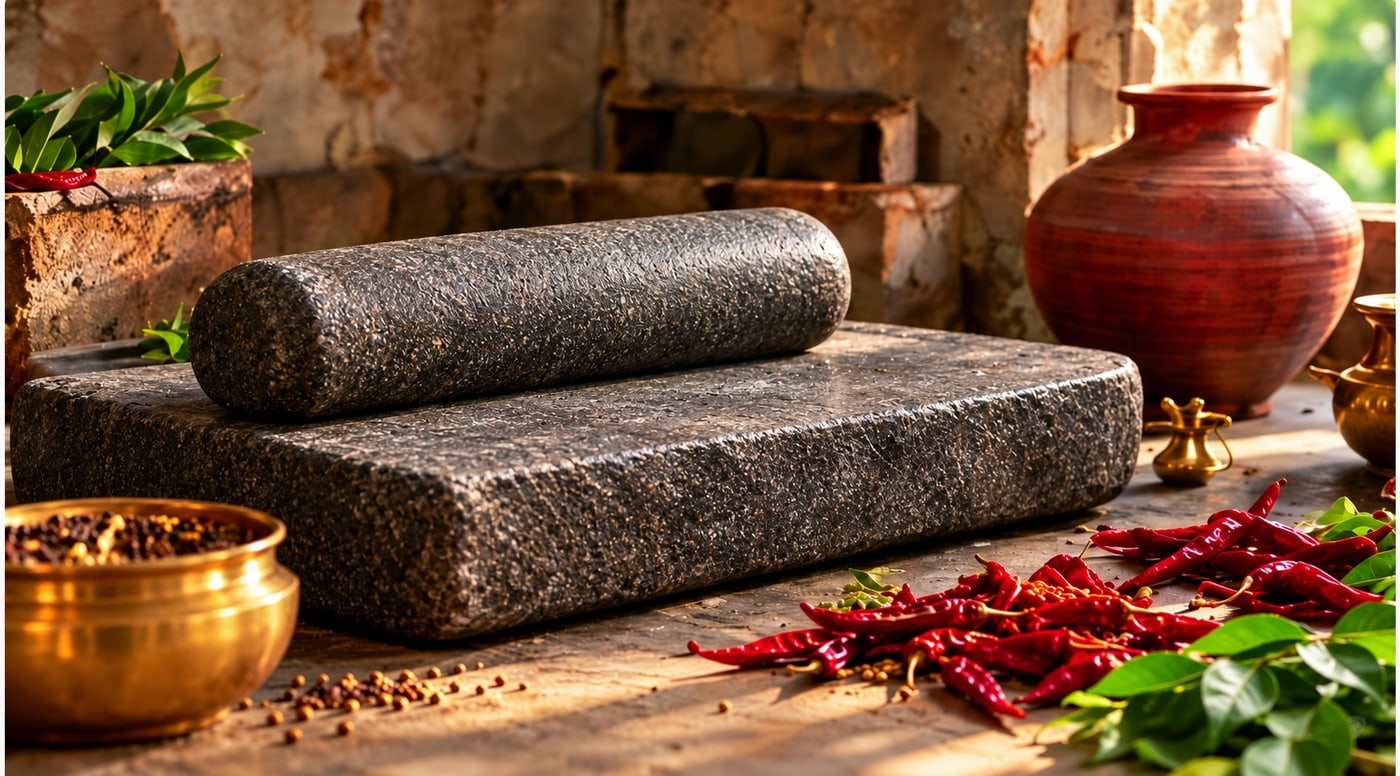
The scrape of a roller across stone. The steady knock of a pestle. Coconut falling in white shreds into a waiting bowl. For some of us, these are sounds remembered from a grandmother’s kitchen. For others, the tools themselves are a first discovery.
கல்லில் குழவி உருளும் ஓசை, உலக்கையின் சீரான தட்டல், துருவிய தேங்காய் கிண்ணத்தில் விழும் காட்சி — சிலருக்கு இவை பாட்டியின் சமையலறை நினைவுகள்; மற்றவர்களுக்கு இக்கருவிகளே ஒரு புதிய அறிமுகம்.
An அம்மி — ammi, an உரல் — ural, or an அரிவாள்மணை — arivaalmanai tells us something about how a meal came together. Ingredients had to be cleaned, pounded, ground and cut before they reached the pot. Each action asked for a different tool, and each tool depended on the cook’s judgement.
அம்மி, உரல், அரிவாள்மணை ஆகியவை ஒரு உணவு எப்படி உருவானது என்பதைச் சொல்கின்றன. சமைப்பதற்கு முன் பொருட்களைச் சுத்தம் செய்து, இடித்து, அரைத்து, நறுக்க வேண்டும்; ஒவ்வொரு வேலைக்கும் ஒரு தனிக் கருவி, ஒவ்வொரு கருவிக்கும் சமைப்பவரின் கணிப்பு தேவை.
Come closer to these familiar objects. Their story connects food with Tamil words, household knowledge and the people who made daily cooking possible. Names and forms vary between families and places; the ones gathered here offer a starting point for recognising them.
இக்கருவிகளின் கதை உணவை, தமிழ்ச் சொற்களை, வீட்டு அறிவை, அன்றாடச் சமையலைச் சாத்தியமாக்கிய மக்களை இணைக்கிறது. பெயர்களும் வடிவங்களும் குடும்பத்துக்குக் குடும்பம், ஊருக்கு ஊர் மாறும்; இங்குள்ளவை அடையாளம் காண ஒரு தொடக்கம் மட்டுமே.
Ammi and kuzhavi for grinding pastes அம்மியும் குழவியும்
The அம்மி — ammi is the flat grinding slab. The குழவி — kuzhavi is the stone roller worked across it. Together, they turn prepared spices, herbs and coconut into a paste.
அம்மி என்பது தட்டையான அரைக்கும் கல்; குழவி அதன் மேல் உருளும் கல் உருளை. இரண்டும் சேர்ந்து மசாலா, கீரை, தேங்காய் ஆகியவற்றை விழுதாக்குகின்றன.
The cook presses the roller down and moves it back and forth, gathering the ingredients into the centre as they spread. A little water helps when the mixture needs it. The work can stop while the paste still has texture, or continue until it becomes smoother.
சமைப்பவர் குழவியை அழுத்தி முன்னும் பின்னும் நகர்த்தி, பரவும் பொருளை நடுவில் சேர்க்கிறார். தேவைப்பட்டால் சிறிது தண்ணீர் சேர்க்கலாம். கொரகொரப்பாகவோ மென்மையாகவோ, விரும்பிய பதத்தில் நிறுத்தலாம்.
Think of துவையல் — thuvaiyal, a ground accompaniment served with a meal. Its texture depends on more than the ingredients. The pressure of the hands and the time spent grinding help shape the result.
துவையலை எடுத்துக்கொள்ளுங்கள். அதன் பதம் பொருட்களை மட்டும் சார்ந்ததல்ல; கையின் அழுத்தமும் அரைக்கும் நேரமும் அதைத் தீர்மானிக்கின்றன.
The heavy slab stays steady while the roller moves. Stone gives both pieces a hard working surface, but the cook decides how firmly to press and when the paste is ready.
கனமான அம்மி அசையாமல் இருக்க, குழவி நகர்கிறது. கல் உறுதியான பரப்பைத் தருகிறது; எவ்வளவு அழுத்துவது, எப்போது நிறுத்துவது என்பதைச் சமைப்பவரே முடிவு செய்கிறார்.
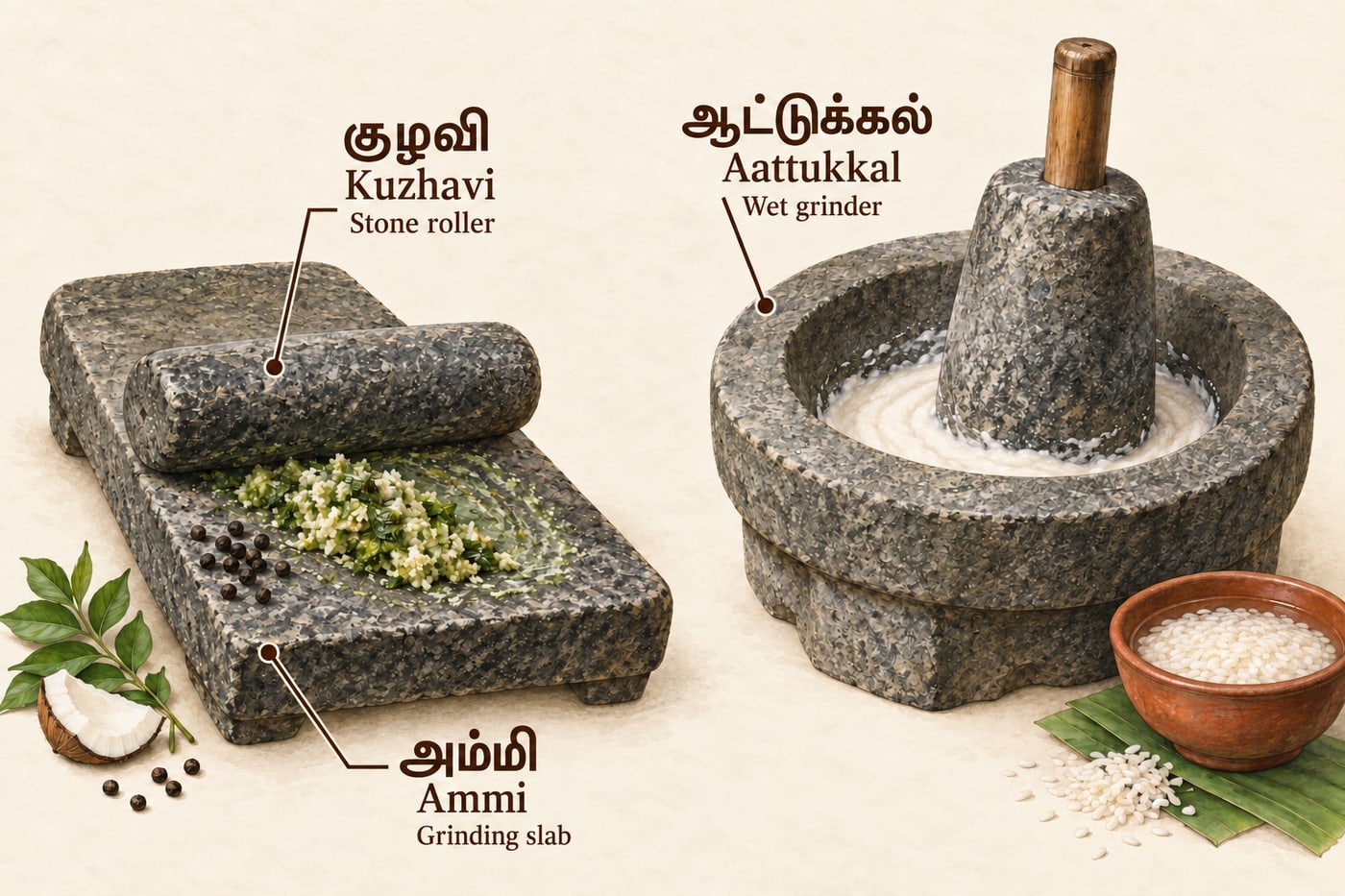
Aattukkal for wet grinding ஆட்டுக்கல்
The ஆட்டுக்கல் — aattukkal holds ingredients in a hollow stone basin. A moving stone works inside it, sometimes guided by a wooden grip.
ஆட்டுக்கல்லில் பொருட்கள் குழிவான கல் தொட்டியில் இருக்கும். அதனுள் ஒரு கல் சுழல்கிறது; சில சமயம் மரக் கைப்பிடி அதற்கு உதவுகிறது.
Soaked rice or pulses are added in manageable portions, with water adjusted during grinding. The hollow keeps the wet mixture together while the moving stone crushes and rubs it against the basin. Familiar household uses include preparing batter for idli and dosai. Grinding prepares the batter; fermentation follows separately when the recipe calls for it. IDC IIT Bombay describes this manual grinding method.
ஊறவைத்த அரிசி அல்லது பருப்பைச் சிறிது சிறிதாகச் சேர்த்து, தண்ணீரைச் சரிசெய்து அரைக்கிறார்கள். இட்லி, தோசை மாவு இப்படித்தான் தயாராகும். அரைப்பது மாவைத் தயாரிக்கிறது; புளிக்க வைப்பது அதன் பிறகு நடக்கும் தனி வேலை.
The ammi and aattukkal both grind, but their shapes suit different mixtures. A paste can be gathered on a slab. A wetter batter needs a place to stay.
அம்மியும் ஆட்டுக்கல்லும் அரைக்கவே பயன்படுகின்றன; ஆனால் வடிவம் வேறு. விழுதை அம்மியில் சேர்த்துக்கொள்ளலாம்; நீர்த்த மாவுக்குத் தங்க ஒரு குழி வேண்டும்.
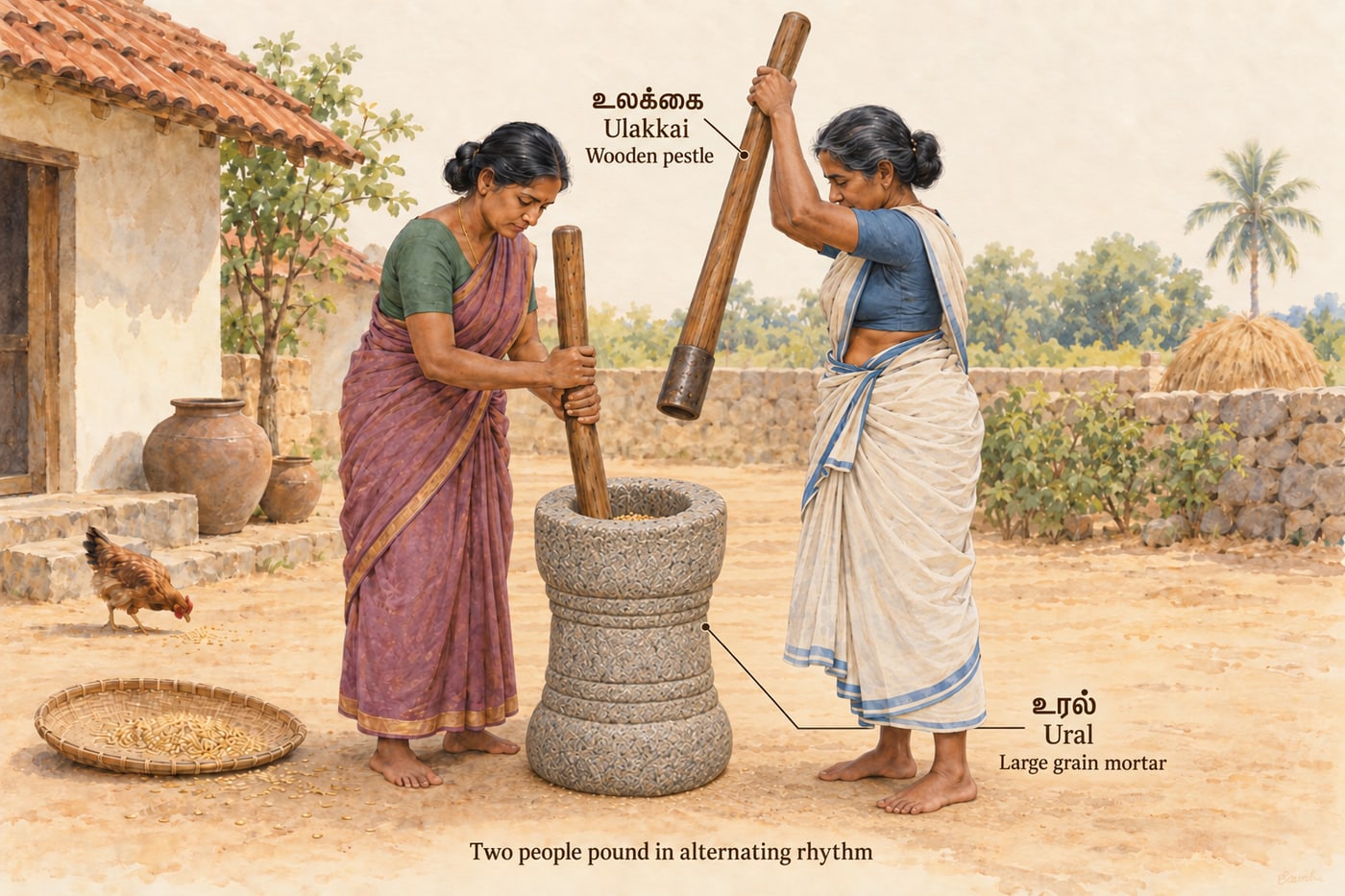
Ural and ulakkai for pounding grain உரலும் உலக்கையும்
The உரல் — ural is the mortar that holds the batch. The உலக்கை — ulakkai is the long pestle lifted and lowered into it.
உரல் பொருளைத் தாங்கும் குழி; உலக்கை அதனுள் தூக்கி இறக்கப்படும் நீண்ட தடி.
Repeated strokes can loosen husks, break grain or crush ingredients, depending on what is being prepared. Mortars may be made from stone or wood. Wooden pestles sometimes have an iron fitting at the working end to withstand repeated wear.
தொடர்ந்து இடிப்பதால் உமி நீங்கும், தானியம் உடையும், பொருட்கள் நசுங்கும். உரல் கல்லாலோ மரத்தாலோ செய்யப்படும். மர உலக்கையின் நுனியில் தேய்மானத்தைத் தாங்க இரும்புப் பூண் இருப்பதுண்டு.
In a larger shared ural, two experienced workers could pound in an alternating rhythm. One pestle descended while the other rose. That rhythm required attention to the other person as well as to the grain.
பெரிய உரலில் இருவர் மாறி மாறி இடிப்பார்கள்; ஒரு உலக்கை இறங்கும்போது மற்றது எழும். அந்தத் தாளத்துக்குத் தானியத்தின் மீது மட்டுமல்ல, உடன் இடிப்பவர் மீதும் கவனம் தேவை.
The word உலக்கைப்பாட்டு — ulakkaippaattu, associated with pounding songs, remembers the people alongside the implement. Work could have a rhythm and a voice.
“உலக்கைப்பாட்டு” என்ற சொல் கருவியோடு அதைப் பயன்படுத்திய மக்களையும் நினைவுகூர்கிறது. உழைப்புக்கு ஒரு தாளமும் ஒரு குரலும் இருந்தது.
Tamil literature also preserves a glimpse of this preparation. In Sirupaanatrupadai, lines 189–195 connect rice pounded with an iron-faced pestle to food offered in hospitality. The passage brings the labour of preparing grain into the story of welcoming a guest. Read the poem and translation.
தமிழ் இலக்கியத்திலும் இதன் சுவடு உண்டு. சிறுபாணாற்றுப்படையின் 189–195 அடிகள், இரும்புப் பூண் உலக்கையால் குற்றிய அரிசியை விருந்தோம்பலோடு இணைத்துக் கூறுகின்றன.
That literary reference does not date every form pictured here. Household tools have changed across periods, regions and makers.
அந்த இலக்கியக் குறிப்பு, இங்கே படத்தில் உள்ள ஒவ்வொரு வடிவத்தின் காலத்தையும் உறுதி செய்வதில்லை. வீட்டுக் கருவிகள் காலம், இடம், செய்பவர் ஆகியவற்றுக்கு ஏற்ப மாறியுள்ளன.
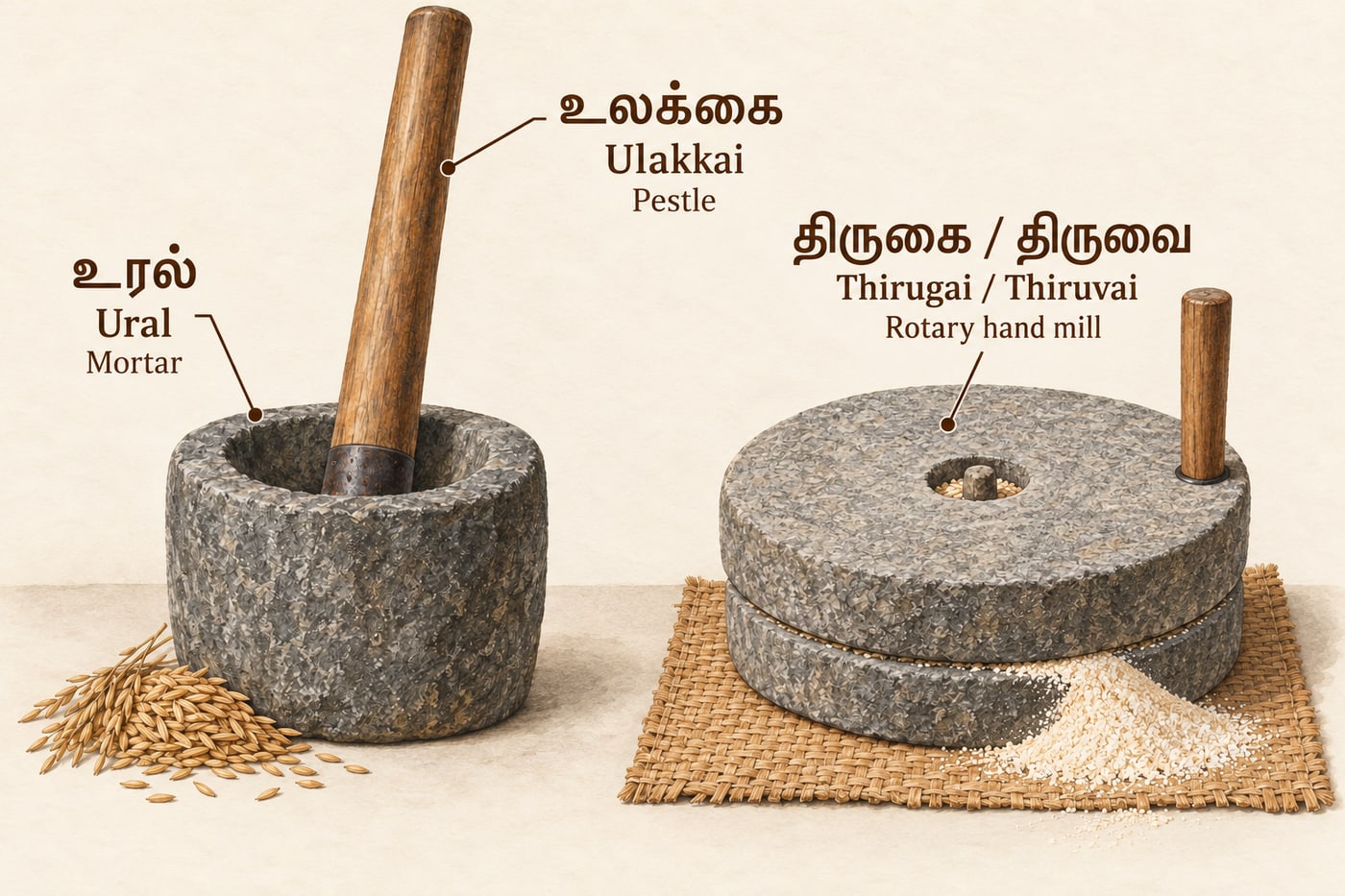
Thirugai and thiruvai for dry milling திருகை, திருவை
திருகை — thirugai and திருவை — thiruvai name a rotary hand mill with two circular stones. The lower stone stays in place while the upper one turns.
திருகை, திருவை என்பவை இரண்டு வட்டக் கற்கள் கொண்ட கையால் சுழற்றும் அரவை இயந்திரத்தின் பெயர்கள். கீழ்க்கல் நிலையாக இருக்க, மேற்கல் சுழலும்.
Grain enters through an opening near the centre. A handle set away from the centre lets the user turn the upper stone. The working faces grind the grain between them, and the flour or coarser meal moves towards the edge for collection. Another pass or sieving may be needed for a finer result.
நடுவிலுள்ள துளை வழியே தானியம் போடப்படுகிறது. ஓரத்தில் உள்ள கைப்பிடியால் மேற்கல்லைச் சுழற்ற, தானியம் இரு கற்களுக்கு இடையே அரைபட்டு மாவாக விளிம்புக்கு வருகிறது. மேலும் மென்மையாக்க மறுபடி அரைக்கலாம் அல்லது சலிக்கலாம்.
Here, turning replaces the lifting and striking of the ulakkai. Both tools can prepare grain, but they work differently.
இங்கே உலக்கையின் தூக்கி இடிக்கும் வேலைக்குப் பதிலாகச் சுழற்றுதல் நடக்கிறது. இரண்டும் தானியத்தைத் தயாரிக்கும்; ஆனால் செயல்படும் முறை வேறு.
Kalvam for smaller quantities கல்வம்
The கல்வம் — kalvam offers a smaller hollow for crushing and grinding. A handstone works against its inner surface, keeping a small batch together.
கல்வம் என்பது நசுக்கவும் அரைக்கவும் பயன்படும் சிறிய குழிக்கல். ஒரு கைக்கல் அதன் உட்பரப்பில் அழுத்தி வேலை செய்கிறது.
A few ingredients can be easier to manage in this contained space than on a broad slab. Pressing, rubbing and crushing gradually change their texture.
சிறிய அளவுப் பொருட்களைப் பரந்த அம்மியைவிட இந்தக் குழியில் கையாள்வது எளிது. அழுத்தி, தேய்த்து, நசுக்க நசுக்கப் பதம் மாறுகிறது.
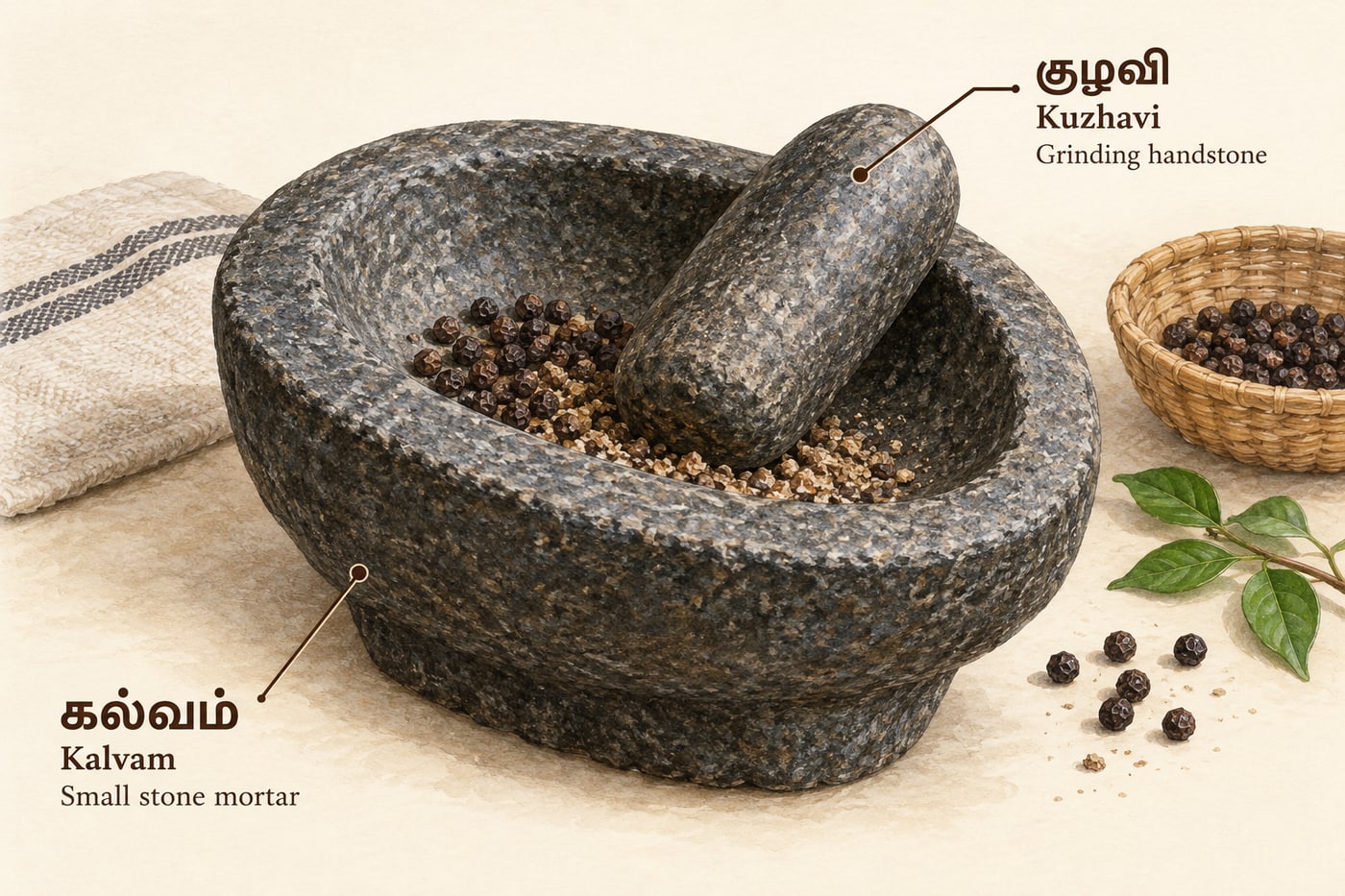
Hollow grinding stones also occur in household medicine traditions. An old kalvam cannot always be identified as a kitchen spice tool from its shape alone. Related vocabulary includes கலுவம் — kaluvam and குழியம்மி — kuzhiyammi, with medicinal associations in older dictionary entries.
குழிக்கற்கள் வீட்டு மருத்துவ மரபிலும் பயன்பட்டன. எனவே ஒரு பழைய கல்வத்தை அதன் வடிவத்தை மட்டும் வைத்துச் சமையல் கருவி என்று சொல்லிவிட முடியாது. கலுவம், குழியம்மி என்பவை தொடர்புடைய சொற்கள்.
Muram and sulagu for separating grain முறமும் சுளகும்
After pounding, the grain may still be mixed with loosened husk and chaff. The முறம் — muram or சுளகு — sulagu helps with the next stage.
இடித்த பிறகும் தானியத்துடன் உமியும் பதரும் கலந்திருக்கும். அடுத்த கட்டத்துக்கு முறம் அல்லது சுளகு உதவுகிறது.
These woven trays are broad, shallow and light enough to lift. Controlled tossing, tilting and shaking help separate the batch. During winnowing, moving air carries lighter husk and chaff away more readily than the heavier grain. Other unwanted pieces may still need to be picked out by hand.
இவை அகன்ற, ஆழமற்ற, எளிதில் தூக்கக்கூடிய பின்னிய தட்டுகள். புடைக்கும்போது காற்று இலேசான உமியையும் பதரையும் அடித்துச் செல்ல, கனமான தானியம் தங்குகிறது. மீதமுள்ள கல், குப்பைகளைக் கையால் பொறுக்க வேண்டியிருக்கும்.
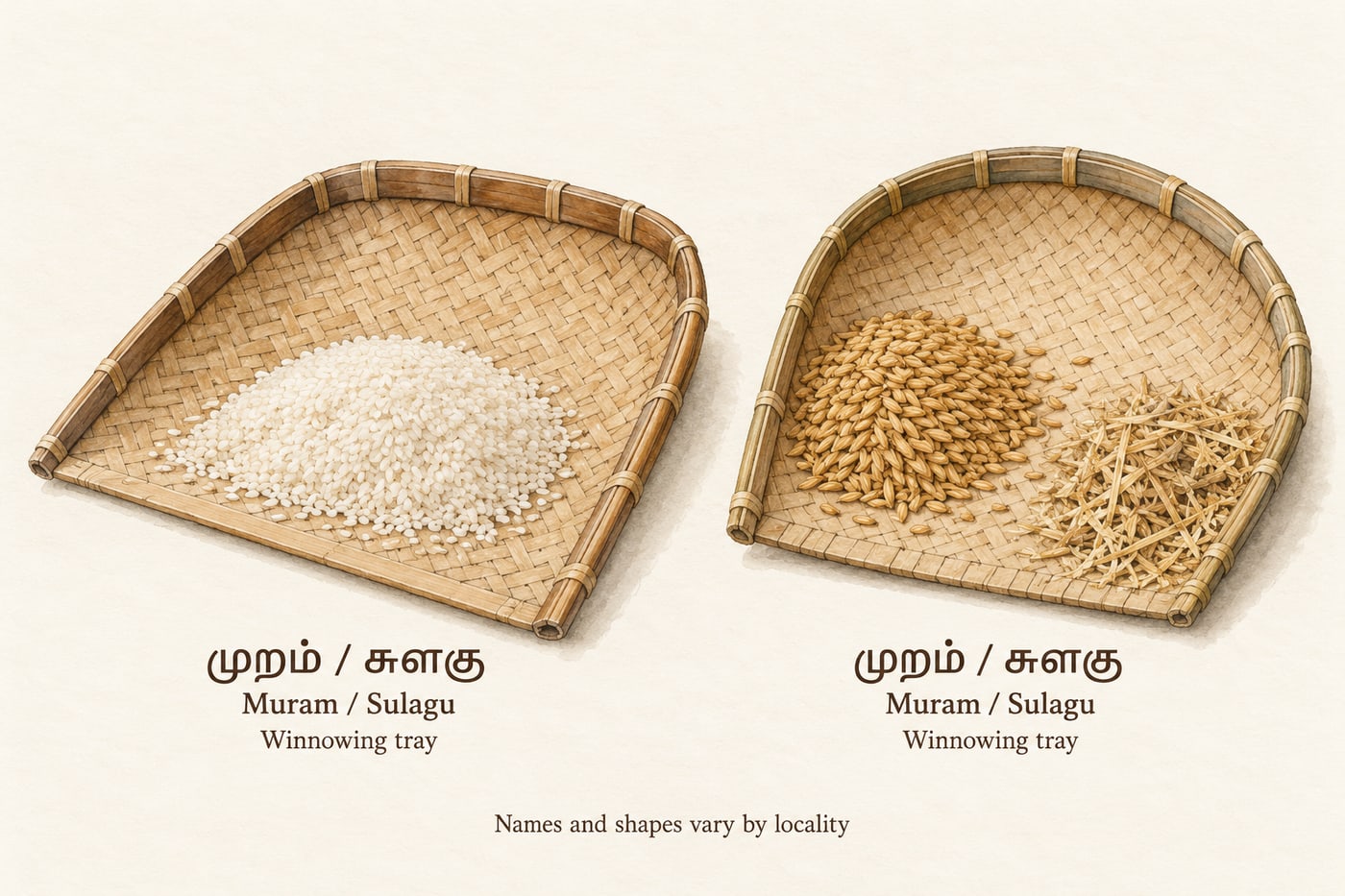
Split bamboo and other basketry materials give the tray a surface that is both light and firm. A strengthened rim helps it hold its shape through repeated handling.
பிளந்த மூங்கிலும் பிற பின்னல் பொருட்களும் தட்டை இலேசாகவும் உறுதியாகவும் ஆக்குகின்றன. வலுவூட்டிய விளிம்பு அதன் வடிவத்தைக் காக்கிறது.
The ural loosens or breaks material. The woven tray helps separate it afterwards. A single bowl of prepared grain can carry the work of both.
உரல் உமியை நீக்குகிறது; முறம் அதைப் பிரிக்கிறது. ஒரு கிண்ணம் தானியத்தில் இரண்டின் உழைப்பும் அடங்கியிருக்கிறது.
Arivaalmanai for cutting at a fixed blade அரிவாள்மணை
The அரிவாள்மணை — arivaalmanai, often called அருவாமணை — aruvaamanai in speech, carries a blade fixed to a base, commonly of wood.
அரிவாள்மணை — பேச்சில் அருவாமணை — மரத்தாலான அடிப்பகுதியில் நிலையாகப் பொருத்தப்பட்ட கத்தியைக் கொண்டது.
The cook sits or squats beside it and brings the ingredient to the edge, turning and moving the food to make the cut. The blade remains attached to its support.
சமைப்பவர் அதன் அருகில் அமர்ந்து, காயைக் கத்தியின் முனைக்குக் கொண்டுவந்து, திருப்பித் திருப்பி நறுக்குகிறார். கத்தி அசைவதில்லை.
Metal supplies the cutting edge, while the base supports the blade. Some versions combine cutting and coconut scraping on the same implement. Designs vary, but the fixed blade is the feature that makes this tool easy to recognise.
உலோகம் வெட்டும் முனையைத் தருகிறது; அடிப்பகுதி அதைத் தாங்குகிறது. சிலவற்றில் நறுக்குதலும் தேங்காய் துருவுதலும் ஒரே கருவியில் இணைந்திருக்கும். நிலையான கத்தியே இதன் அடையாளம்.
Kaththi and vettukkaththi for hand held cutting கத்தியும் வெட்டுக்கத்தியும்
With a கத்தி — kaththi, the cook holds the handle and moves the blade. The word is a broad Tamil term for a knife.
கத்தியில், சமைப்பவர் கைப்பிடியைப் பிடித்துக் கத்தியை நகர்த்துகிறார். “கத்தி” என்பது பொதுவான தமிழ்ச் சொல்.
வெட்டுக்கத்தி — vettukkaththi refers to a cutting or chopping knife, often with a more substantial blade. Its size and shape depend on the work it is intended to do.
வெட்டுக்கத்தி என்பது வெட்டவும் கொத்தவும் பயன்படும், பெரும்பாலும் கனமான அலகு கொண்ட கத்தி. அதன் அளவும் வடிவமும் வேலையைப் பொறுத்து மாறும்.
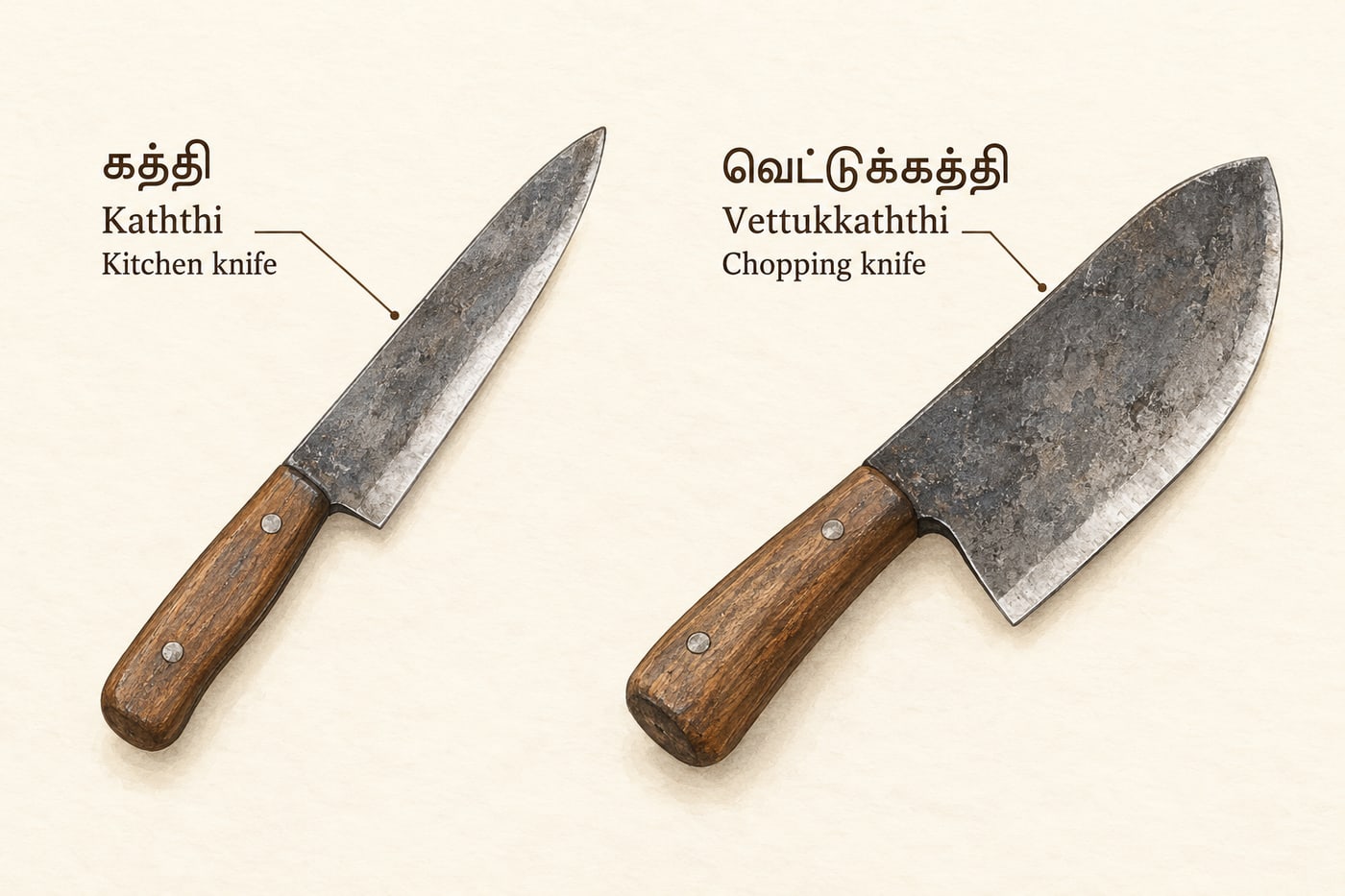
A sharpened edge concentrates force along a narrow line. The handle gives the hand a grip from which to guide it. The related word அரிவாள் — arivaal belongs to a sickle or billhook family used in gardens and agriculture; it is not an exact name for every kitchen knife.
கூரான முனை விசையை ஒரு மெல்லிய கோட்டில் குவிக்கிறது; கைப்பிடி அதை வழிநடத்த உதவுகிறது. “அரிவாள்” என்பது தோட்டத்திலும் வயலிலும் பயன்படும் கருவிக் குடும்பத்தைச் சேர்ந்தது; ஒவ்வொரு சமையல் கத்திக்கும் அது சரியான பெயர் அல்ல.
Coconut tools for pieces and shreds தேங்காய்க் கருவிகள்
One coconut can take several paths towards a meal. Its flesh may be released in pieces, scraped into shreds, or ground into a paste. Those textures call for different actions.
ஒரு தேங்காய் பல வழிகளில் உணவை அடைகிறது: துண்டுகளாக, துருவலாக, அரைத்த விழுதாக. ஒவ்வொன்றுக்கும் வேறு வேறு வேலை தேவை.
Thengai keeral, also remembered here as thengo keeral, is a contributed household name for a tool used to release larger pieces of flesh from an opened coconut shell. The illustration labels it தேங்காய் கீறல். Related vocabulary includes தேங்காய் கீறி — thengai keeri, though names alone do not establish an identical design.
தேங்காய் கீறல் என்பது உடைத்த தேங்காயிலிருந்து பெரிய துண்டுகளைப் பெயர்த்தெடுக்கும் கருவிக்கு ஒரு வீட்டில் வழங்கிய பெயர். தேங்காய் கீறி என்ற சொல்லும் உண்டு; ஆனால் பெயர் ஒன்றாக இருப்பதால் வடிவமும் ஒன்று என்று சொல்ல முடியாது.
The தேங்காய்த் துருவி — thengai thuruvi scrapes the white flesh into shreds. In a floor-mounted form, a toothed metal head is attached to a wooden support. The cook holds an opened coconut half against the teeth, moves it across them and repositions it as the flesh is removed. IDC IIT Bombay documents the scraper and its use.
தேங்காய்த் துருவி வெள்ளைப் பருப்பைத் துருவலாக்குகிறது. தரையில் வைக்கும் வகையில், பற்கள் கொண்ட உலோகத் தலை மர அடிப்பகுதியில் பொருத்தப்பட்டிருக்கும். தேங்காய் மூடியைப் பற்களில் அழுத்தி, நகர்த்தி, திருப்பித் துருவுகிறார்கள்.
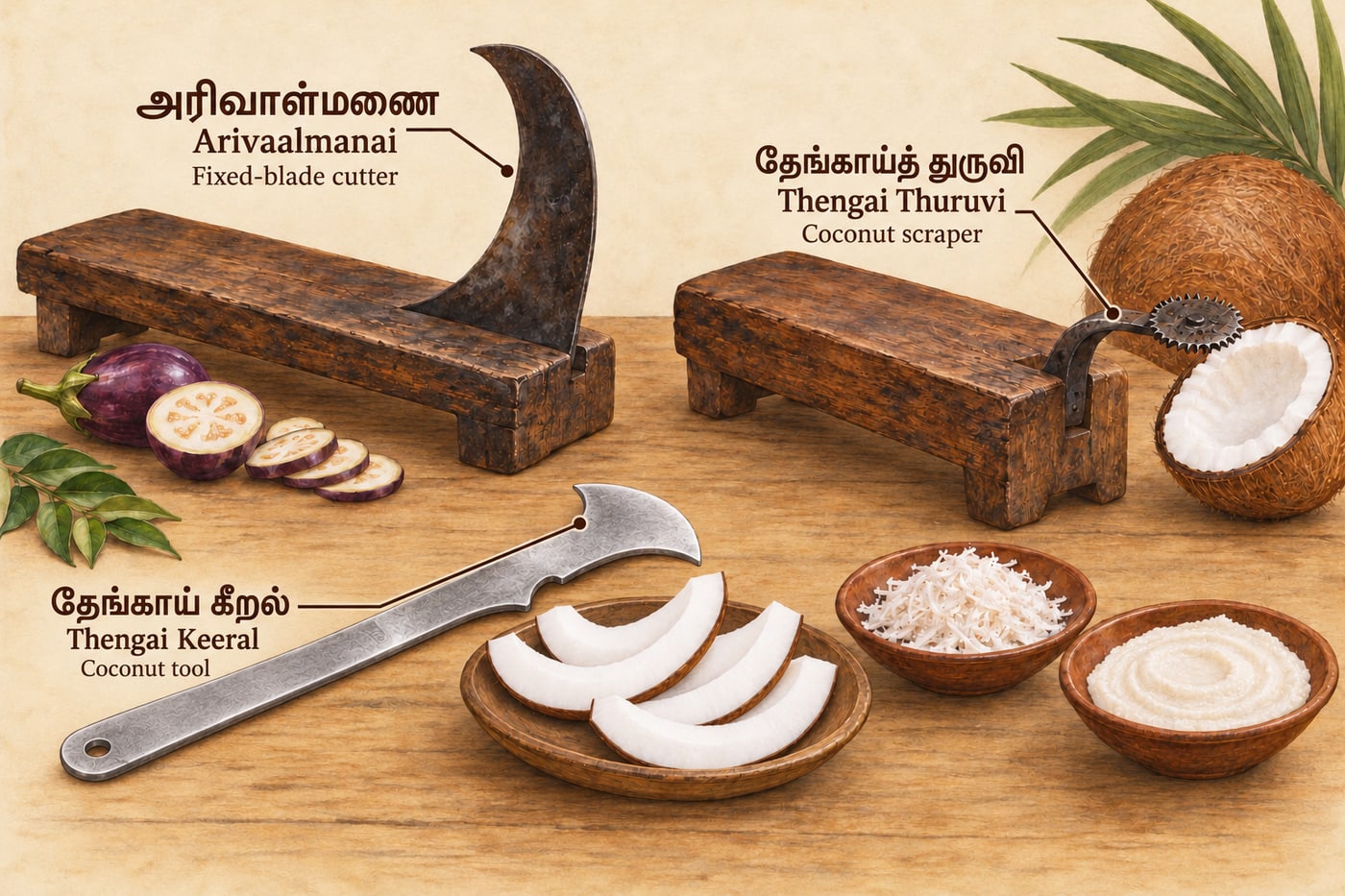
The curved working end of a flesh-removing tool engages a larger piece. The scraper’s many teeth remove small shreds. Prepared coconut can then go to the ammi when a paste is needed.
பருப்பைப் பெயர்க்கும் கருவியின் வளைந்த முனை பெரிய துண்டுகளை எடுக்கிறது; துருவியின் பற்கள் சிறு துருவலைத் தருகின்றன. விழுது வேண்டுமானால் துருவிய தேங்காய் அம்மிக்குச் செல்லும்.
Opening the shell, removing the flesh and grating it are separate jobs. Extracting coconut milk adds another stage after the flesh has been prepared.
ஓட்டை உடைப்பது, பருப்பை எடுப்பது, துருவுவது — இவை தனித்தனி வேலைகள். தேங்காய்ப்பால் எடுப்பது அதற்கும் பிறகு வரும் இன்னொரு கட்டம்.
Thoratti for gathering beyond reach தொரட்டி
The kitchen’s work begins beyond its doorway. Fruit and leaves may first have to be gathered from a tree.
சமையலறையின் வேலை அதன் வாசலுக்கு வெளியே தொடங்குகிறது. காயையும் இலையையும் முதலில் மரத்திலிருந்து பறிக்க வேண்டும்.
A தொரட்டி — thoratti extends that reach with a long pole and a hooked or cutting head. Thoraddu is another contributed household pronunciation. Recorded forms include துறட்டி / துரட்டி — thuratti and துறட்டுக்கோல் — thurattukkol.
தொரட்டி என்பது நீண்ட கம்பின் நுனியில் கொக்கி அல்லது வெட்டும் தலை கொண்ட கருவி; எட்டாத உயரத்தை எட்ட உதவுகிறது. துறட்டி, துரட்டி, துறட்டுக்கோல் என்ற வடிவங்களும் பதிவாகியுள்ளன.
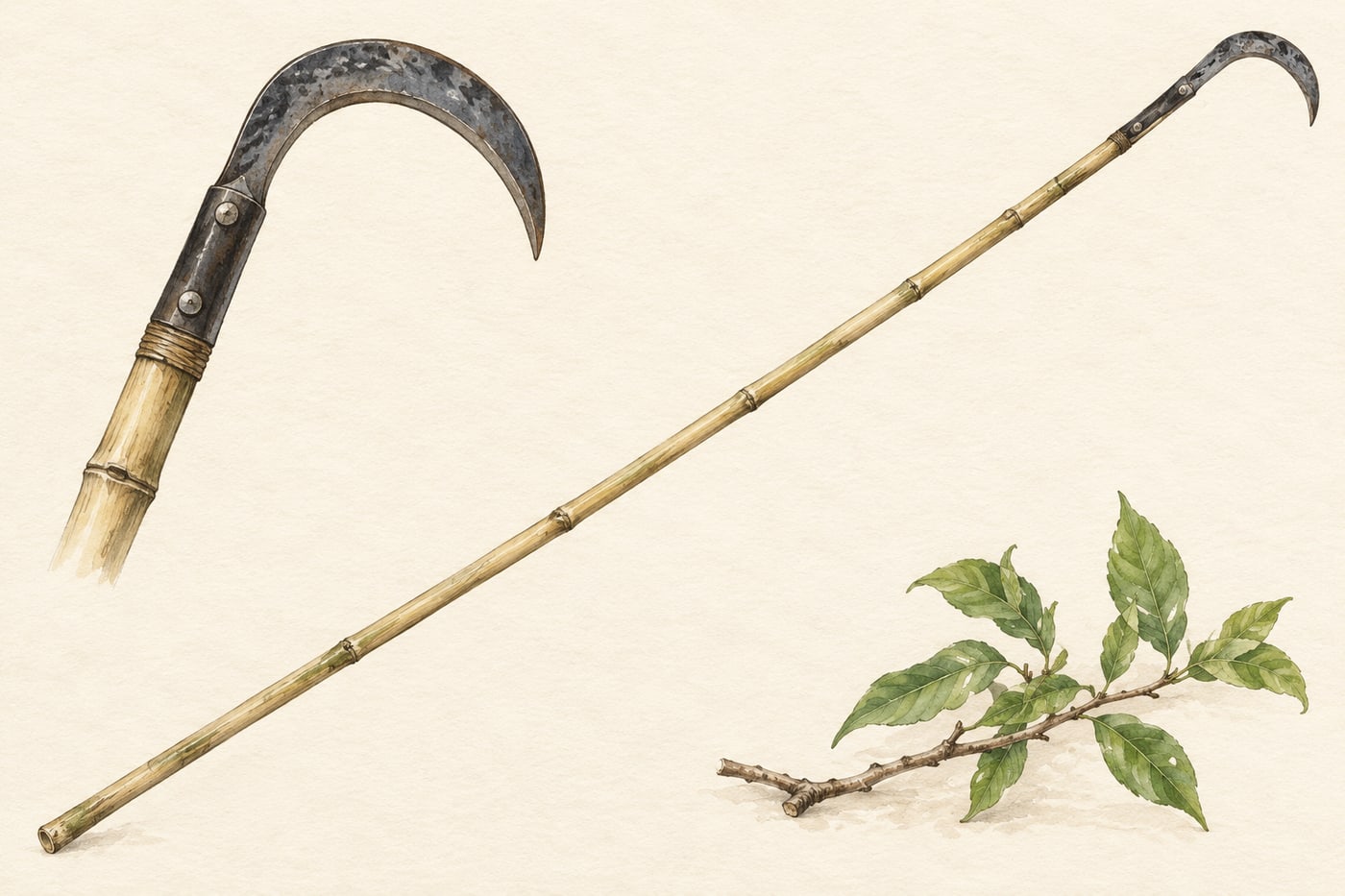
Bamboo or wood provides a long shaft without the weight of a solid metal pole. The head does the gathering or cutting, according to its form. This implement belongs to the yard, garden or grove that supplies the kitchen.
மூங்கில் அல்லது மரம், உலோகத்தின் கனமில்லாமல் நீண்ட கம்பைத் தருகிறது. தலைப்பகுதி பறிக்கிறது அல்லது வெட்டுகிறது. இது சமையலறைக்குப் பொருள் தரும் முற்றம், தோட்டம், தோப்பு ஆகியவற்றின் கருவி.
Chekku for extracting oil செக்கு
The செக்கு — chekku, also written sekku, belongs to the wider food-making life of a village. A large oil press was not necessarily kept in each home.
செக்கு ஒரு ஊரின் பொதுவான உணவுத் தயாரிப்பு வாழ்வைச் சேர்ந்தது. பெரிய எண்ணெய்ச் செக்கு ஒவ்வொரு வீட்டிலும் இருந்ததில்லை.
In an animal-powered press, a bullock walks around a fixed mortar, connected through a beam and linkage to the moving mechanism. A pestle works through prepared oil-bearing material, such as sesame seeds or copra, the dried coconut kernel. Crushing and pressure release oil, leaving a solid cake. The operator tends the batch and collects the oil.
மாட்டுச் செக்கில், நிலையான உரலைச் சுற்றி ஒரு காளை நடக்கிறது; நுகத்தடி வழியாக அது உலக்கையை இயக்குகிறது. எள், கொப்பரை போன்ற எண்ணெய் வித்துகள் நசுங்கி எண்ணெய் பிரிய, பிண்ணாக்கு மிஞ்சுகிறது. செக்காட்டுபவர் அதைக் கவனித்து எண்ணெயைச் சேகரிக்கிறார்.
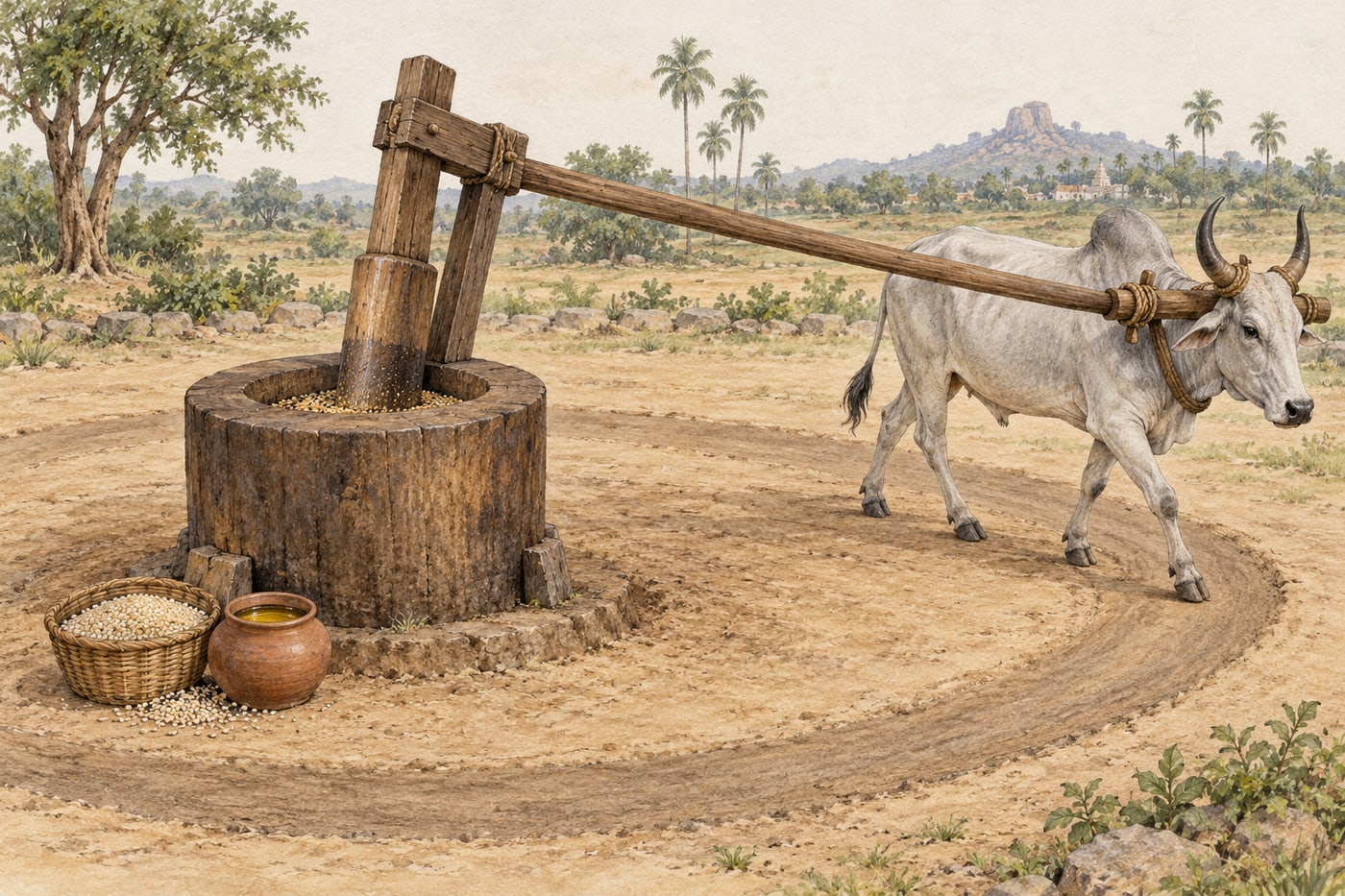
The animal supplies power, but people still prepare the material and manage the pressing. A meal connects the cook with work carried out elsewhere as well as at home.
விலங்கு ஆற்றலைத் தருகிறது; ஆனால் பொருளைத் தயாரிப்பதும் ஆட்டுவதைக் கவனிப்பதும் மனிதர்களே. ஒரு உணவு, வீட்டில் மட்டுமல்ல, வேறு இடங்களில் நடந்த உழைப்போடும் சமைப்பவரை இணைக்கிறது.
The materials and the makers பொருட்களும் கைவினைஞர்களும்
Stone, wood, metal and woven plant strips each bring useful qualities to these tools. Their value also depends on how carefully they are made.
கல், மரம், உலோகம், பின்னிய நார் — ஒவ்வொன்றும் இக்கருவிகளுக்குத் தனிப் பயன் தருகிறது. அவற்றின் மதிப்பு எவ்வளவு கவனமாகச் செய்யப்பட்டன என்பதையும் பொறுத்தது.
A stoneworker chooses sound material, shapes the slab or hollow, and finishes the working surfaces. The weight, fit and texture matter when the two stone parts work together.
கல் தச்சர் நல்ல கல்லைத் தேர்ந்து, அம்மியையோ குழியையோ வடித்து, வேலை செய்யும் பரப்புகளைச் செம்மை செய்கிறார். இரண்டு கற்கள் சேர்ந்து வேலை செய்யும்போது எடை, பொருத்தம், சொரசொரப்பு ஆகியவை முக்கியம்.
Wood can become a handle, a base, a pestle or part of a press. The maker shapes it for the task and secures its joints. A comfortable grip or a well-supported blade affects everyday use.
மரம் கைப்பிடியாக, அடிப்பகுதியாக, உலக்கையாக, செக்கின் பகுதியாக மாறும். தச்சர் அதை வேலைக்கு ஏற்ப வடித்து, இணைப்புகளை உறுதிப்படுத்துகிறார். பிடிக்க வசதியான கைப்பிடியும் நன்கு தாங்கப்பட்ட கத்தியும் அன்றாடப் பயன்பாட்டை எளிதாக்குகின்றன.
A smith can heat and forge iron or steel into a working shape, then finish the edge. Hardening and tempering depend on the steel and the intended tool. Forging shapes solid metal; casting gives molten metal its form in a mould.
கொல்லர் இரும்பையோ எஃகையோ காய்ச்சி அடித்து வடிவமைத்து, முனையைக் கூராக்குகிறார். அடித்து வடிப்பது திண்ம உலோகத்துக்கு; வார்ப்பது உருகிய உலோகத்தை அச்சில் ஊற்றுவது.
Basket makers turn plant material into a different kind of strength. Thin strips bend and interlace into a broad surface, while a reinforced edge keeps the tray firm. Whole bamboo can provide the shaft of a harvesting pole; split strips can become part of a woven tray.
கூடை முடைவோர் தாவரப் பொருளை வேறு வகை வலிமையாக மாற்றுகிறார்கள். மெல்லிய பட்டைகள் வளைந்து பின்னி அகன்ற பரப்பாகின்றன; வலுவூட்டிய விளிம்பு தட்டை உறுதியாக்குகிறது. முழு மூங்கில் தொரட்டிக் கம்பாகும்; பிளந்த பட்டைகள் முறமாகும்.
Cooking vessels have their own material stories, including clay, copper, brass, bronze and cast iron. They deserve a separate look at heating, storing and serving food.
சமையல் பாத்திரங்களுக்கும் மண், செம்பு, பித்தளை, வெண்கலம், வார்ப்பிரும்பு எனத் தனிக் கதை உண்டு. அது தனியாகப் பார்க்க வேண்டிய தலைப்பு.
A Tamil name guide தமிழ்ப் பெயர்க் கையேடு
Keep these words close to the pictures. Spoken names and English spellings vary, and some related terms have a broader meaning.
இந்தச் சொற்களைப் படங்களோடு சேர்த்து வைத்துக்கொள்ளுங்கள். பேச்சு வழக்குப் பெயர்களும் ஆங்கில எழுத்துக்கூட்டல்களும் மாறுபடும்; சில சொற்களுக்குப் பரந்த பொருளும் உண்டு.
| Tamil name | English spelling | What to recognise |
|---|---|---|
| அம்மி | Ammi | Flat grinding slab; also ammikkal |
| குழவி | Kuzhavi | Moving stone roller or handstone |
| ஆட்டுக்கல் | Aattukkal | Hollow wet grinder; related forms include aattural and aattaankal |
| உரல் | Ural | Mortar; kallural specifies stone and mara ural specifies wood. Another name is குந்தாணி — kundhaani |
| உலக்கை | Ulakkai | Long pestle; olakkai occurs in speech |
| திருகை / திருவை | Thirugai / Thiruvai | Rotary hand mill; thirigai is another form. Another name is ஏந்திரம் — eanthiram |
| கல்வம் | Kalvam | Hollow grinding implement; also kaluvam |
| முறம் / சுளகு | Muram / Sulagu | Winnowing-tray names with local overlap |
| அரிவாள்மணை | Arivaalmanai | Fixed-blade cutter; aruvaamanai is a spoken form |
| கத்தி / வெட்டுக்கத்தி | Kaththi / Vettukkaththi | Knife / cutting or chopping knife |
| தேங்காய்த் துருவி | Thengai Thuruvi | Coconut scraper |
| தேங்காய் கீறல் | Thengai Keeral | Contributed household name for the pictured flesh-removing tool |
| தொரட்டி | Thoratti | Harvesting pole; also remembered here as Thoraddu |
| செக்கு | Chekku / Sekku | Oil press |
The knowledge carried in a meal ஒரு உணவில் அடங்கிய அறிவு
The implement does only part of the work. Someone judges the water, feels the changing texture, gathers the mixture and decides when to stop.
கருவி வேலையின் ஒரு பகுதியை மட்டுமே செய்கிறது. தண்ணீரை அளப்பதும், மாறும் பதத்தை உணர்வதும், எப்போது நிறுத்துவது என்று முடிவு செய்வதும் ஒரு மனிதரே.
In many households, women carried much of this repeated preparation. Remembering the tools also means recognising their time, effort and skill. Modern appliances have changed that work. The older objects help us understand what preparing an everyday meal involved.
பல வீடுகளில் இந்தத் தொடர் உழைப்பின் பெரும்பகுதியைப் பெண்களே சுமந்தார்கள். கருவிகளை நினைவுகூர்வது அவர்களின் நேரத்தையும் உழைப்பையும் திறமையையும் மதிப்பதாகும். நவீன இயந்திரங்கள் அந்த வேலையை மாற்றிவிட்டன; பழைய கருவிகள் ஒரு அன்றாட உணவுக்கு எவ்வளவு உழைப்பு தேவைப்பட்டது என்பதைப் புரியவைக்கின்றன.
A tool may remain in use, rest in a corner of an old home, or survive mainly in a family’s words. Each can begin a conversation.
ஒரு கருவி இன்னும் பயன்பாட்டில் இருக்கலாம், பழைய வீட்டின் மூலையில் ஓய்ந்திருக்கலாம், அல்லது குடும்பத்தின் சொற்களில் மட்டும் வாழலாம். ஒவ்வொன்றும் ஒரு உரையாடலைத் தொடங்கும்.
உங்கள் வீட்டில் இந்தக் கருவிகளை என்ன பெயரில் அழைத்தார்கள்?
What did your family call these tools? Which dish do you remember being made with them? Ask someone who used one, and keep the name alongside the memory.
இந்தக் கருவிகளால் செய்த எந்த உணவு உங்கள் நினைவில் இருக்கிறது? அவற்றைப் பயன்படுத்திய ஒருவரிடம் கேளுங்கள்; பெயரையும் நினைவையும் சேர்த்துப் பதிந்து வையுங்கள்.
Comments கருத்துகள்Show Hide
No comments yet. Be the first to share a memory or a name your family used. இன்னும் கருத்துகள் இல்லை.
← Back to Learn & DiscoverMore in Society, Culture, Music & Arts →