
The Five Tamil Landscapes
ஐந்திணை
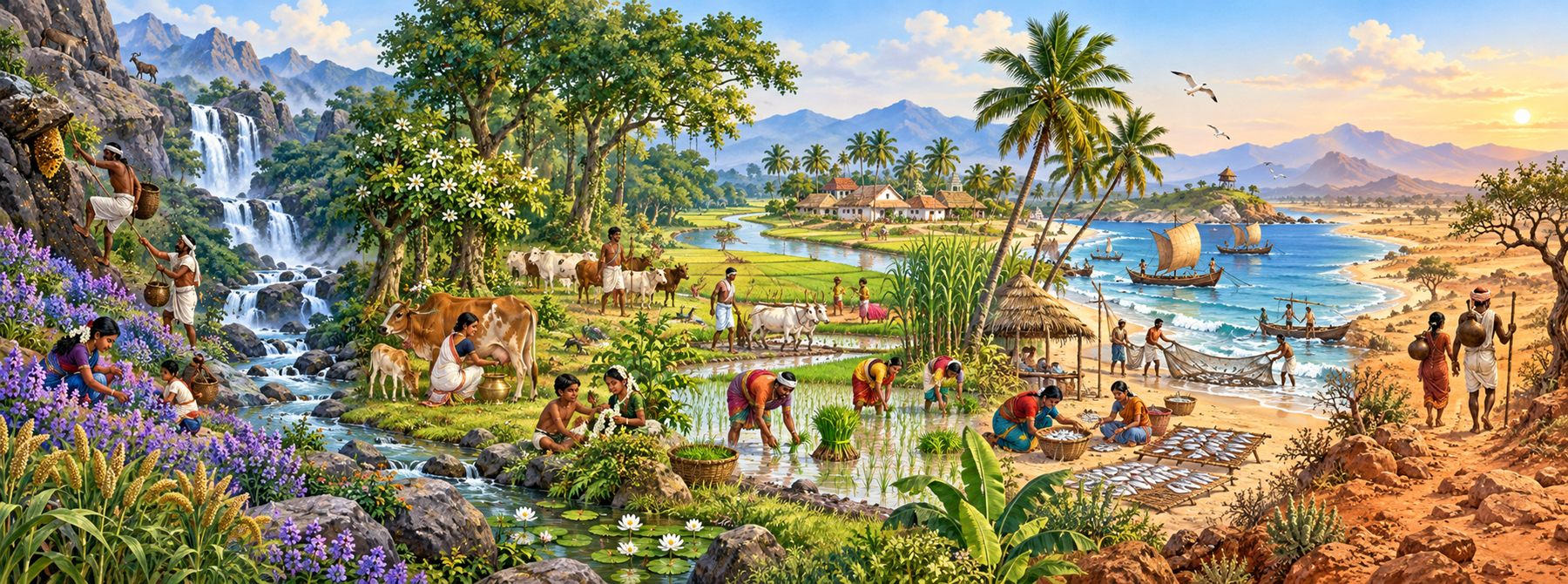
More than two thousand years ago, Sangam poets sorted the Tamil country into five landscapes, ஐந்திணை (Ainthinai): Kurinji, Mullai, Marutham, Neithal and Palai. The Tolkappiyam, the oldest Tamil grammar, explains the idea. Each thinai has its own land and seasons, its own flower, god, people, work and food, and its own feeling in love poetry. Name the landscape, and listeners knew the mood of the poem.
Imagine visiting each one. What would you see growing? How would people find food and water? What work would they do?
சங்க காலப் புலவர்கள் தமிழ் நிலத்தை ஐந்து திணைகளாகப் பகுத்தனர்: குறிஞ்சி, முல்லை, மருதம், நெய்தல், பாலை. ஒவ்வொரு திணைக்கும் உரிய நிலம், பொழுது, பூ, தெய்வம், மக்கள், தொழில், உணவு ஆகியவற்றையும், அகப் பாடல்களில் அது குறிக்கும் உணர்வையும் தொல்காப்பியம் வகுத்துக் கூறுகிறது.
மாயோன் மேய காடுறை உலகமும்சேயோன் மேய மைவரை உலகமும்வேந்தன் மேய தீம்புனல் உலகமும்வருணன் மேய பெருமணல் உலகமும்
குறிஞ்சி · Kurinji — The mountains
மலையும் மலை சார்ந்த இடமும் · Mountains and the land around them
- Flower · பூ
- Kurinji · குறிஞ்சி
- God · தெய்வம்
- Murugan (Seyon) · சேயோன் (முருகன்)
- People · மக்கள்
- Kuravar · குறவர்
- Work and food · தொழில், உணவு
- Honey, millet, mountain rice · தேன், தினை, மலைநெல்
- Feeling · உரிப்பொருள்
- Meeting · புணர்தல்
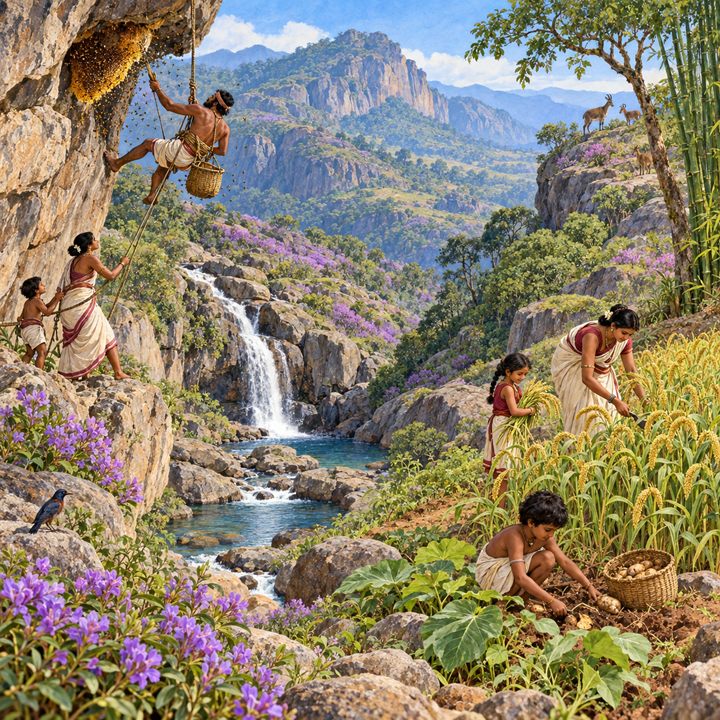
Streams tumble over rocks, waterfalls fill mountain pools, and the slopes turn blue when the kurinji flower blooms; the Nilgiri kind flowers only once in twelve years. The ground is steep and stony, so crops grow wherever the soil allows.
The hill people, the Kuravar, gathered honey from the cliffs, dug up roots and grew thinai millet and mountain rice. Murugan is the god of the hills. In love poems, Kurinji is where two people first meet.
Remember Kurinji: Mountains, waterfalls, honey, millet and meeting.
தமிழில்
குறிஞ்சி என்பது மலைகளும் அருவிகளும் நிறைந்த நிலம். மக்கள் தேன் சேகரித்தனர்; ஏற்ற இடங்களில் தினை போன்ற தானியங்களைப் பயிரிட்டனர். காதலர்கள் சந்திப்பதைப் பற்றிய பாடல்களிலும் குறிஞ்சி இடம்பெறும்.
முல்லை · Mullai — The forest and pasture
காடும் காடு சார்ந்த இடமும் · Forest and the land around it
- Flower · பூ
- Mullai (jasmine) · முல்லை
- God · தெய்வம்
- Thirumal (Mayon) · மாயோன் (திருமால்)
- People · மக்கள்
- Aayar (herders) · ஆயர்
- Work and food · தொழில், உணவு
- Herding; milk, curd, ghee, millets · ஆநிரை மேய்த்தல்; பால், தயிர், நெய், வரகு
- Feeling · உரிப்பொருள்
- Patient waiting · இருத்தல்
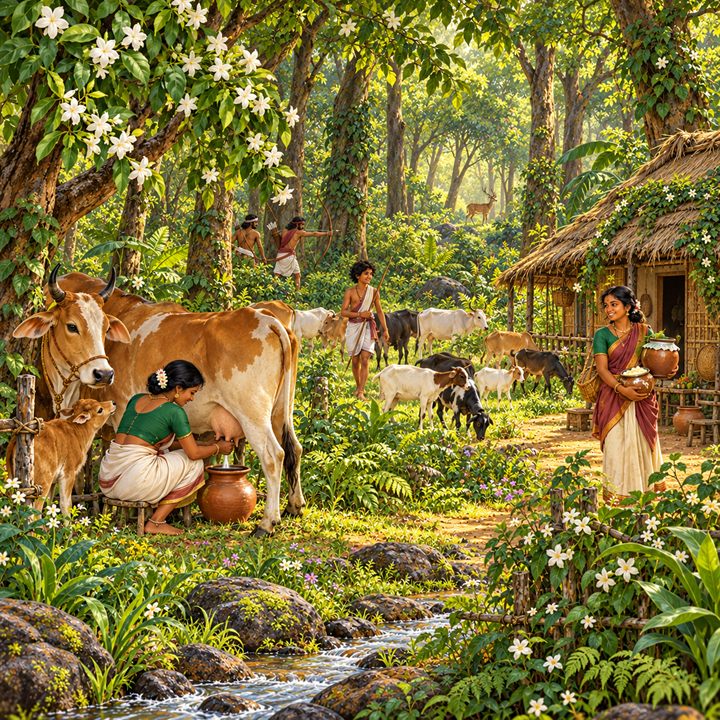
Below the hills lie woods and open grassland. The rains come, the mullai jasmine flowers, and cattle graze in the shade of the trees.
Herders, the Aayar, cared for cows and goats, turned milk into curd and ghee, and traded it for grain; they also grew hardy millets such as varagu and saamai. Thirumal is the god of the forest. In love poems, Mullai is patient waiting for a loved one to come home, often at dusk in the rainy season as the herds return.
Remember Mullai: Jasmine, cattle, milk and patient waiting.
தமிழில்
முல்லை என்பது மரங்களும் கால்நடைகள் மேயும் புல்வெளிகளும் உள்ள நிலம். மக்கள் மாடுகளையும் ஆடுகளையும் வளர்த்து, பால், தயிர், நெய் ஆகியவற்றைப் பெற்றனர். அன்பானவர் வீடு திரும்பக் காத்திருப்பது முல்லைப் பாடல்களின் உணர்வு.
மருதம் · Marutham — The fertile farmland
வயலும் வயல் சார்ந்த இடமும் · Fields and the land around them
- Flower · பூ
- Marutham tree · மருதம்
- God · தெய்வம்
- Indra (Vendan) · வேந்தன் (இந்திரன்)
- People · மக்கள்
- Uzhavar (farmers) · உழவர்
- Work and food · தொழில், உணவு
- Farming; paddy, sugarcane, plantain · உழவு; நெல், கரும்பு, வாழை
- Feeling · உரிப்பொருள்
- A lovers’ quarrel · ஊடல்
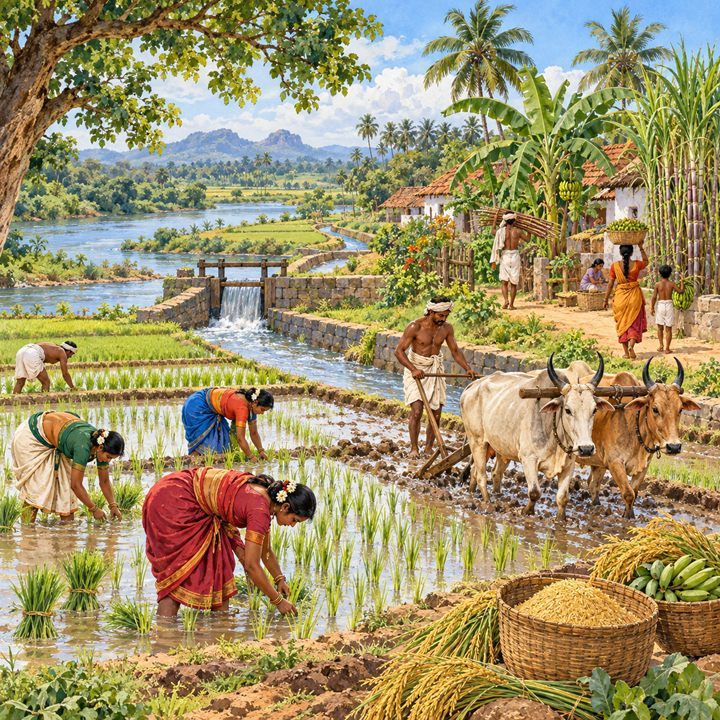
Rivers and channels water the plains, and paddy, sugarcane and plantain grow around busy villages and towns. The land is named after the marutham tree that shades the riverbanks.
Farmers, the Uzhavar, ploughed, planted and harvested. Their rice was traded for fish and salt from the coast, dairy from the herders and honey from the hills. Indra is the god of the fields. In love poems, Marutham is ஊடல் (oodal), a lovers’ quarrel that ends in making up.
Remember Marutham: Rivers, paddy fields, rice and a quarrel mended.
தமிழில்
மருதம் என்பது ஆறுகள் பாயும் வளமான வயல் நிலம். உழவர்கள் நெல் பயிரிட்டனர்; கரும்பும் வாழையும் வளர்ந்தன. வீட்டிலும் ஊரிலும் வாழும் மக்களுக்கிடையே ஏற்படும் ஊடல் மருதப் பாடல்களில் இடம்பெறும்.
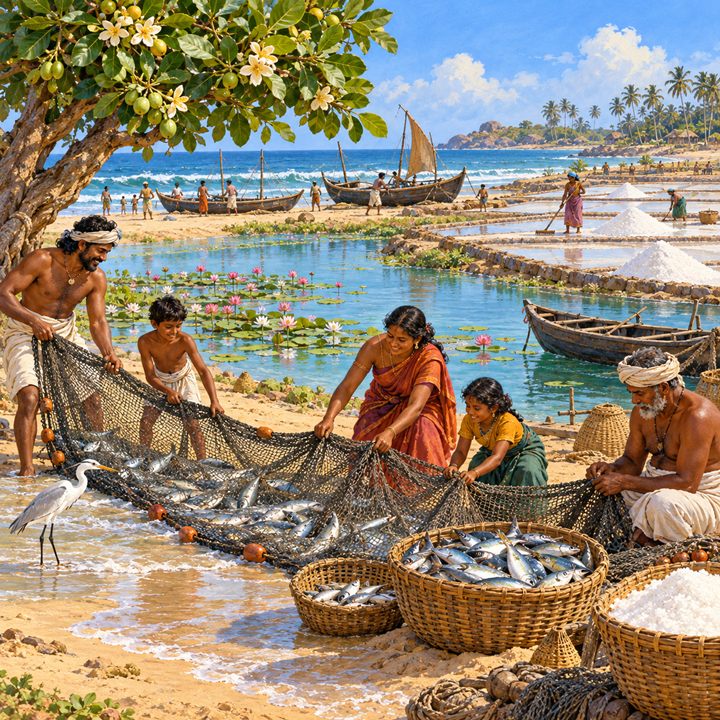
நெய்தல் · Neithal — The coast
கடலும் கடல் சார்ந்த இடமும் · Sea and the land around it
- Flower · பூ
- Neithal (water lily) · நெய்தல்
- God · தெய்வம்
- Varunan · வருணன்
- People · மக்கள்
- Paratavar (fishers) · பரதவர்
- Work and food · தொழில், உணவு
- Fishing and salt making · மீன் பிடித்தல், உப்பு விளைத்தல்
- Feeling · உரிப்பொருள்
- Longing · இரங்கல்
Here the land meets the sea: sandy shores, backwaters where the neithal water lily blooms, and boats riding the waves. Salt water and sand make it very different from Marutham’s paddy fields.
Fishers, the Paratavar, went out with boats and nets, dried their catch on the sand and made salt from seawater. Fish and salt were traded inland for rice. Varunan, lord of the sea, is their god. In love poems, Neithal is longing on the shore, waiting for a boat to return.
Remember Neithal: Sea, boats, fish, salt and longing.
தமிழில்
நெய்தல் என்பது கடலும் கடற்கரையும் சேர்ந்த நிலம். மக்கள் படகுகளிலும் வலைகளிலும் மீன் பிடித்தனர்; உப்பும் தயாரித்தனர். கடலுக்குச் சென்ற அன்பானவர் திரும்பி வரக் காத்திருக்கும் ஏக்கம் நெய்தல் பாடல்களில் ஒலிக்கிறது.
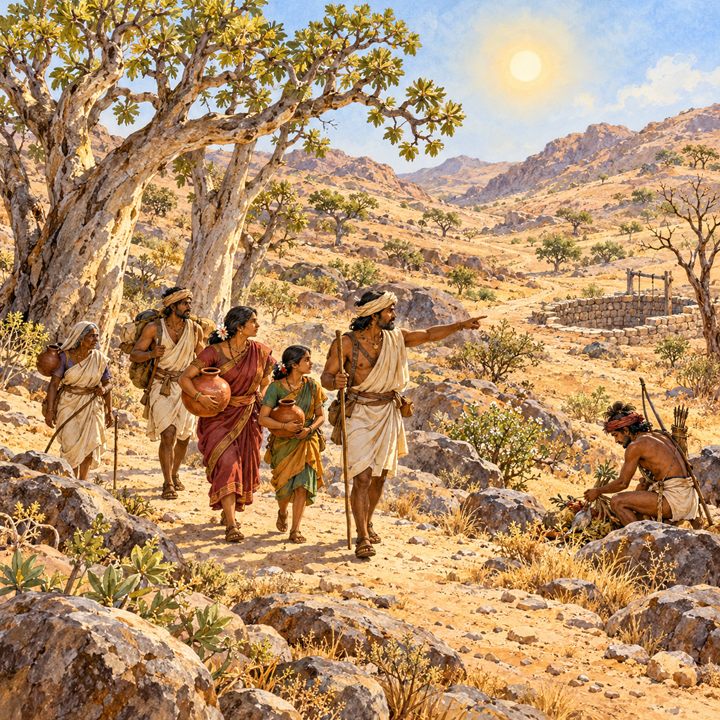
பாலை · Palai — The dry land
வறண்ட நிலமும் பயணப் பாதையும் · Dry land and difficult paths
- Flower · பூ
- Palai tree · பாலை
- God · தெய்வம்
- Kotravai · கொற்றவை
- People · மக்கள்
- Eyinar and Maravar · எயினர், மறவர்
- Work and food · தொழில், உணவு
- Travel; hunting · பயணம்; வேட்டை
- Feeling · உரிப்பொருள்
- Separation · பிரிதல்
Palai has no land of its own. When the rains fail, hills and forests dry up: streams stop, trees stand bare and paths bake in the sun. Poets call this parched country Palai, after the palai tree that stays green in the heat.
Travellers crossed it carrying water pots, looking for wells and shade, and the poems warn of hunters and wayside robbers along the way. Kotravai is its goddess. In love poems, Palai is separation: someone setting out on a long, hard journey away from home.
Remember Palai: Heat, scarce water, hard journeys and separation.
தமிழில்
பாலை என்பது மழை குறைந்து வறண்டுபோன நிலம். இங்கு பயணம் செய்பவர்கள் தண்ணீரையும் நிழலையும் தேடிச் செல்ல வேண்டியிருந்தது. பிரிந்து செல்லும் பயணமும் பிரிவால் வரும் துயரமும் பாலைப் பாடல்களில் இடம்பெறும்.
The five landscapes at a glance · ஐந்திணை ஒரு பார்வையில்
| Thinaiதிணை | Landநிலம் | Flowerபூ | Godதெய்வம் | Peopleமக்கள் | Work and foodதொழில், உணவு | Feelingஉரிப்பொருள் |
|---|---|---|---|---|---|---|
| குறிஞ்சிKurinji | Mountainsமலையும் மலை சார்ந்த இடமும் | Kurinjiகுறிஞ்சி | Murugan (Seyon)சேயோன் (முருகன்) | Kuravarகுறவர் | Honey, millet, mountain riceதேன், தினை, மலைநெல் | Meetingபுணர்தல் |
| முல்லைMullai | Forestகாடும் காடு சார்ந்த இடமும் | Mullai (jasmine)முல்லை | Thirumal (Mayon)மாயோன் (திருமால்) | Aayar (herders)ஆயர் | Herding; milk, curd, ghee, milletsஆநிரை மேய்த்தல்; பால், தயிர், நெய், வரகு | Patient waitingஇருத்தல் |
| மருதம்Marutham | Farmlandவயலும் வயல் சார்ந்த இடமும் | Marutham treeமருதம் | Indra (Vendan)வேந்தன் (இந்திரன்) | Uzhavar (farmers)உழவர் | Farming; paddy, sugarcane, plantainஉழவு; நெல், கரும்பு, வாழை | A lovers’ quarrelஊடல் |
| நெய்தல்Neithal | Coastகடலும் கடல் சார்ந்த இடமும் | Neithal (water lily)நெய்தல் | Varunanவருணன் | Paratavar (fishers)பரதவர் | Fishing and salt makingமீன் பிடித்தல், உப்பு விளைத்தல் | Longingஇரங்கல் |
| பாலைPalai | Dry landவறண்ட நிலமும் பயணப் பாதையும் | Palai treeபாலை | Kotravaiகொற்றவை | Eyinar and Maravarஎயினர், மறவர் | Travel; huntingபயணம்; வேட்டை | Separationபிரிதல் |
These are the traditional associations of the poems, not rules every person followed. People traded with one another, plants and animals appeared in more than one landscape, and real life was more varied than any chart.
Think about it · சிந்தித்துப் பாருங்கள்
If you could visit one landscape for a day, which would you choose? How would you find water, what might you eat, and what would you help someone do?
ஒரு நாள் ஏதேனும் ஒரு நிலத்துக்குச் செல்ல முடிந்தால், எதைத் தேர்ந்தெடுப்பீர்கள்? அங்கே தண்ணீர் எப்படிக் கிடைக்கும், என்ன சாப்பிடுவீர்கள், யாருக்கு என்ன வேலையில் உதவுவீர்கள்?