Skip to content
Thamizh Koodam — A global home for Tamil culture and community

Avvaiyar

ஔவையார்

Avvaiyar is one of the most honoured names in Tamil literature. It belongs to women poets of more than one period: a Sangam-era Avvai whose poems appear in the early anthologies, and a later Avvaiyar associated with the short moral works children learn by heart, such as ஆத்திச்சூடி. Devotional works and many stories are also attached to the name.
Also written
ஒளவையார், Avvaiyar, Auvaiyar
Era
More than one era: a Sangam poet and later poets share the name
Best known for
ஆத்திச்சூடி and the moral works; Sangam poems in Purananuru

Who was Avvaiyar?

ஔவையார் (also written ஒளவையார் or Avvaiyar) is an honoured name in Tamil literary tradition. It should not be used as though every poem attributed to it was written by one woman who lived for centuries.

A Sangam-era Avvai appears in the early anthologies, while the short moral works taught to children are associated with a later Avvaiyar. Devotional works and stories attached to the name form another layer of tradition. Precise biographical dates are uncertain.

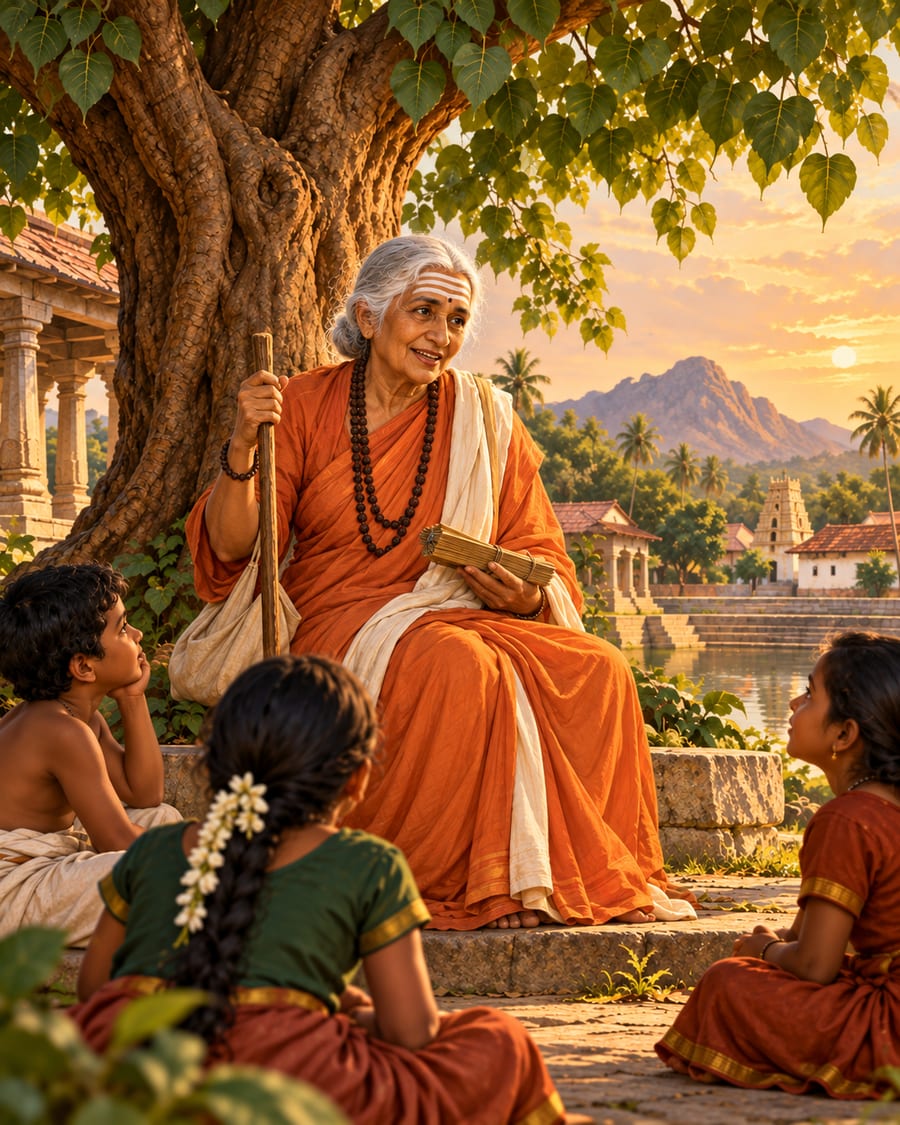
An artist’s painting of Avvaiyar as an elderly poet with a staff and palm-leaf manuscripts, teaching three children under a tree beside a temple tank at sunset
An artist’s interpretation of Avvaiyar; no verified historical likeness exists.

ஆசிரியர் குறிப்பு · A note about the name

“ஔவையார்” என்பது ஒரே காலத்தில் வாழ்ந்த ஒரே புலவரின் தனிப்பெயராகக் கருதப்படுவதில்லை. “அவ்வை” என்ற மரியாதைச் சொல்லுடன் தொடர்புடைய இப்பெயர், தமிழ் இலக்கியத்தின் வெவ்வேறு காலங்களில் இடம்பெறும் பெண் புலவர்களைக் குறிக்கப் பயன்படுகிறது. சங்க இலக்கியத் தொகுப்புகளில் பாடல்கள் இயற்றிய ஔவையார், அதியமான் நெடுமான் அஞ்சி போன்ற தலைவர்களைப் பற்றிப் பாடியவர். குழந்தைகள் முதல் பெரியவர்கள் வரை அறிந்த ஆத்திச்சூடி, கொன்றை வேந்தன், மூதுரை, நல்வழி ஆகிய அறநூல்கள் பிற்கால ஔவையார் மரபுடன் தொடர்புபடுத்தப்படுகின்றன. விநாயகர் அகவல் போன்ற பக்திப் படைப்புகளும் ஔவையார் பெயரில் வழங்கப்படுகின்றன. இந்தப் படைப்புகள் அனைத்தையும் ஒரே வரலாற்று நபரின் ஒரே காலப் படைப்புகளாகக் காட்டாமல், அவற்றின் இலக்கியக் காலத்தையும் மரபு வழி ஆசிரியர் குறிப்பையும் தனித்தனியாகப் பதிவு செய்கிறோம்.

“Avvaiyar” is an honorific name associated with women poets in different periods of Tamil literary history, rather than a secure identification of one author for every attributed work. The Sangam poet’s anthology poems, the later instructional books, and devotional works belong in distinct literary contexts. The exact number of historical poets represented by the name is debated, so this page does not assign a fixed count.

Works and attribution · படைப்புகள்

The Sangam poet · சங்ககால ஔவையார்

Ancient & Classical · பண்டைய இலக்கியம்

Individual poems in the Sangam anthologies are attributed to Avvai. Each anthology itself has many poets, so the collection is not credited to her as a whole.

  • புறநானூறுPurananuruPoems about public life, rulers, generosity, war, loss and counsel; several concern அதியமான் நெடுமான் அஞ்சி (Athiyaman Neduman Anji).
  • குறுந்தொகைKurunthogaiShort akam poems about love and relationships.
  • நற்றிணைNatrinaiAkam poems associated with love and landscapes.
  • அகநானூறுAkananuruLonger akam poems.

The later moral works · பிற்கால ஔவையார் · அறநூல்கள்

Medieval Traditions · இடைக்கால இலக்கியம்

Short works of conduct and wisdom, traditionally attributed to a later Avvaiyar.

The devotional tradition · பக்தி மரபு

Traditional attribution

Works carried under Avvaiyar’s name in devotional tradition; they should not be assumed to be by the Sangam poet.

  • விநாயகர் அகவல்Vinayagar AgavalAn extended devotional poem to Ganesha, with spiritual and yogic imagery.
  • அசதிக்கோவைAsathikkovaiA work associated with the Avvaiyar tradition; a qualified attribution until an edition and historical identification are verified.

Did she write only about Murugan?

No. Stories of Avvaiyar meeting Murugan are a much-loved part of Tamil oral tradition, among them the சுட்ட பழம் (sutta pazham, “roasted fruit”) story. Her attributed literature reaches far beyond that story.

The Sangam poems address rulers and human experience; the later moral books teach everyday conduct; விநாயகர் அகவல் is addressed to Ganesha. The opening of ஆத்திச்சூடி praises a deity adorned with aathi blossoms, and that of கொன்றை வேந்தன் invokes the son of the lord adorned with konrai. Each is best read in its own setting, not as a song to Murugan.

Read the story on this site: Avvaiyar and the Cowherd Boy →

Sources